

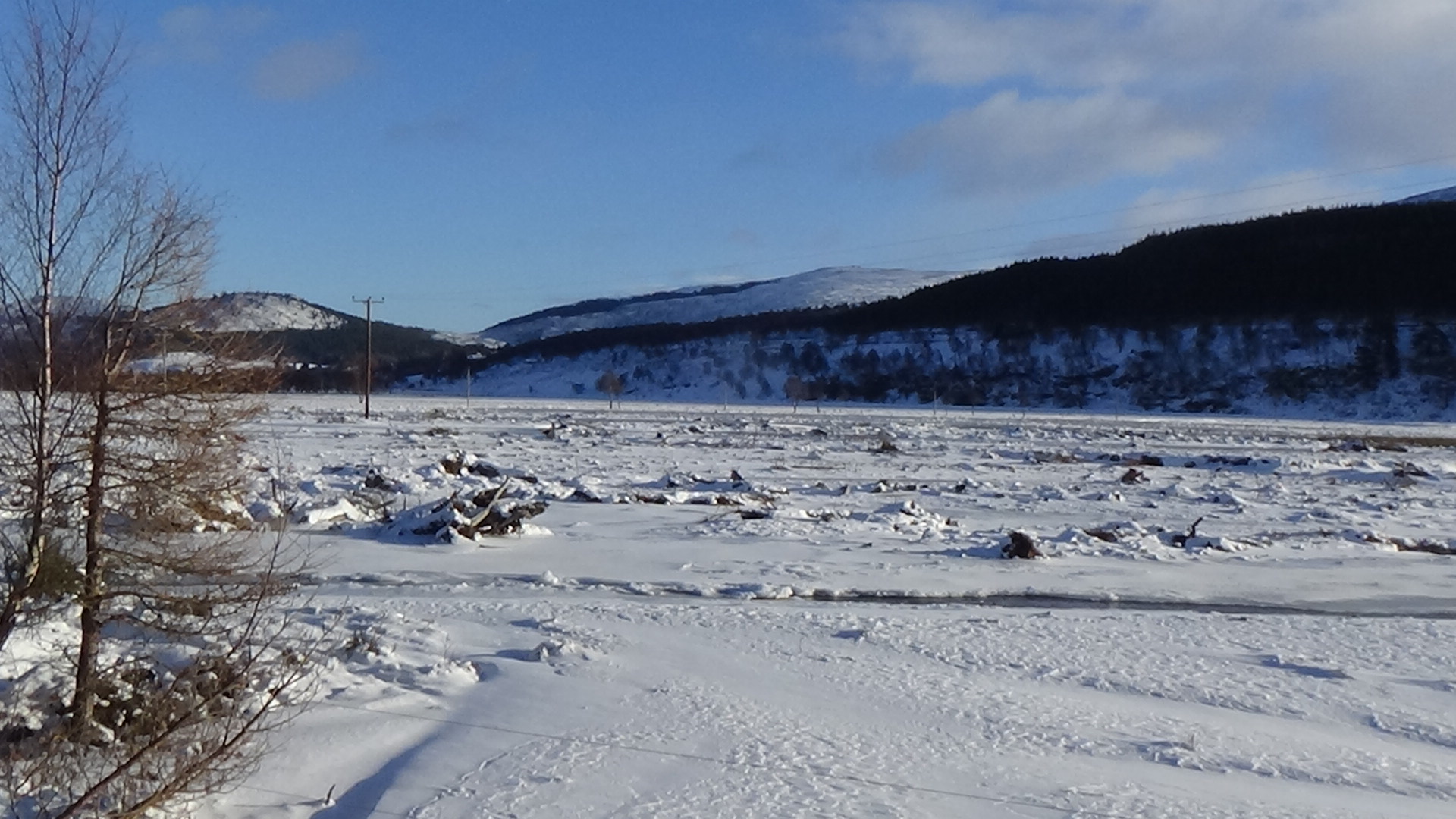
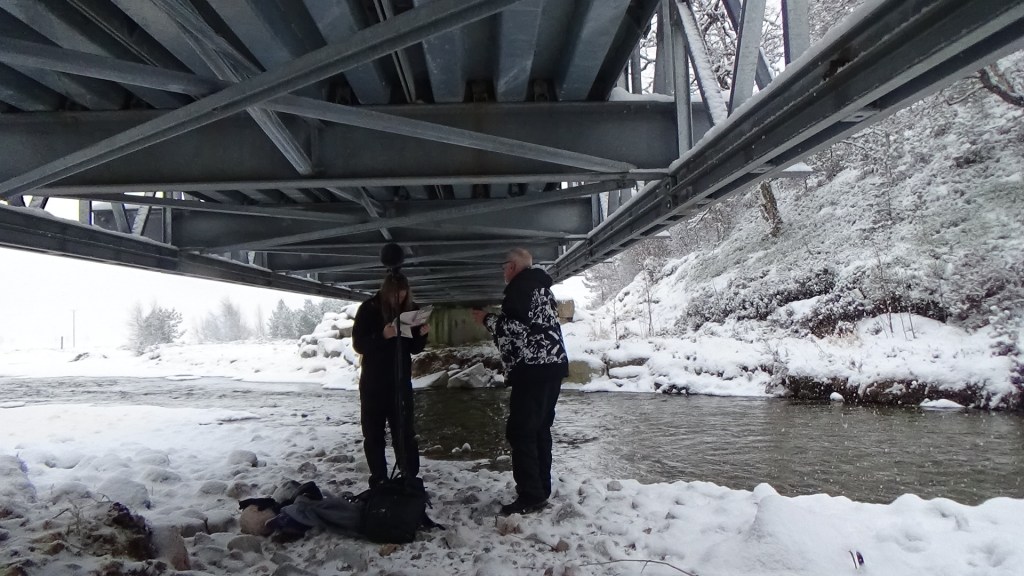
A New Year and already Part 2 of On A Wing and A Prayer is well underway. This time we’re focusing on the Caledonian Pinewoods and rivers of Deeside with a particular focus on Glen Quoich near Braemar. The composers I’m working with on this project are Pete and Joe Stollery. Pete is a longstanding composer and sound artist fascinated by sound and how it relates to place and Joe is an emerging composer who is interested in the local environment, its history, and nature (particularly animals).
Cairngorm National Park
The Cairngorm Mountains are very dear to me and I’ve long followed the debate on how we should manage human activity (leisure and sporting) whilst protecting and maintaining this very special habitat, which contains many rare species (wildcat and capercaillie to name but two) and has the largest remnants of the ancient Caledonian Forest. As someone who spends a lot of time outdoors, I’m acutely aware of changes to our climate, observing rapid fluctuations in winter temperatures and an increase in flooding events, often caused by rapid thaw.
Glen Quoich
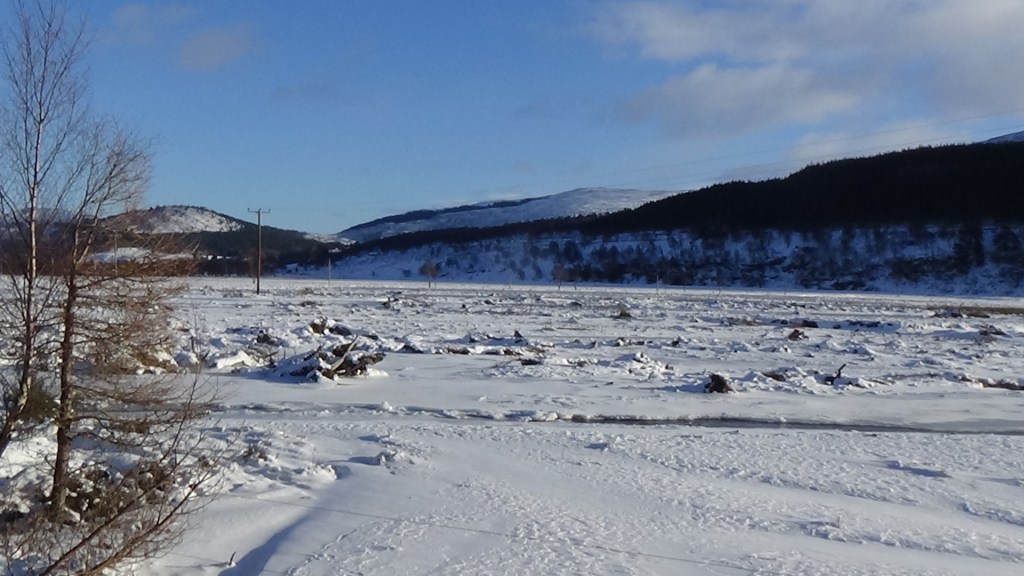
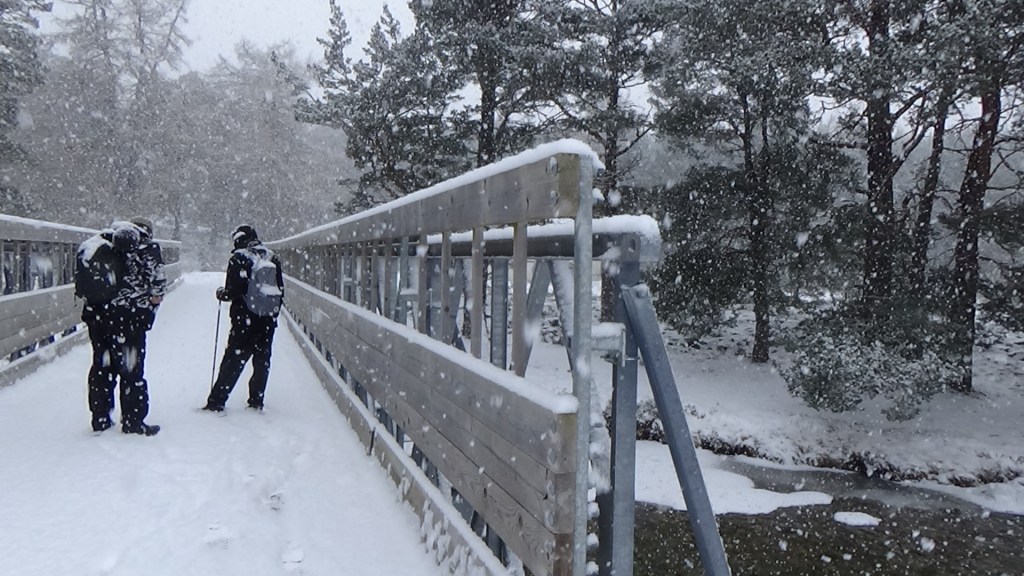
It was a combination of these factors that drew us to Glen Quoich and, in particular, the story of Storm Frank in 2015, which caused massive flooding all along the Dee, damaging infrastructure, homes and businesses and cutting off communities. The Quoich Water itself took out the bridge at the Linn of Quoich and rerouted itself along the alluvial fan as it joins the Dee, necessitating a brand new bridge. However, what intrigued us most was how nature made good of this situation: the increase in wetlands led to a rise in the number of wading birds in the area – oystercatcher, redshank and sandpiper and other birds such as the ringed plover and snipe.
Mar Lodge Estate National Nature Reserve
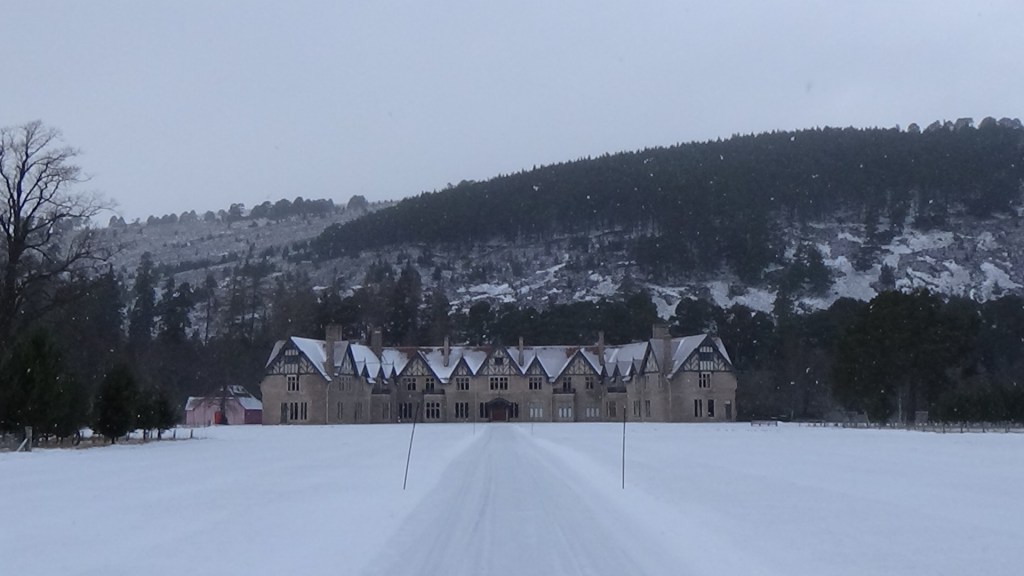
Joe, Pete and I spent an afternoon at Mar Lodge talking to Shaila Rao, conservation manager for the National Trust for Scotland and Ben Dolphin, ranger. We were quite surprised to learn that the Quoich Water frequently changes course. As it joins the floodplain, it has no constraints really, other than the bedrock. I guess that, as humans we’re so used to talking about how we shape nature that we’re often surprised when nature changes course herself (not the case in Iceland, of course, where the land is constantly changing with volcanic and seismic activity). What is changing, however, is the frequency of these events caused by rapid thaws and extreme rainfall events.
We were also interested to hear about deer management and the regeneration of woodland on the estate. Shaila pointed out that there are quite different ways of approaching this on the eastern and western parts of the estate. Towards the Linn of Dee, further east, deer are hunted for sport , meaning that numbers there are relatively high. There is still woodland regeneration in this area, but new trees need to be protected from deer grazing by being fenced off. In Glen Quoich, deer numbers are much lower, resulting in a quite different feel to the landscape. Even in midwinter I was struck by how lush this glen felt with its mix of pine and deciduous trees.
Recording sounds
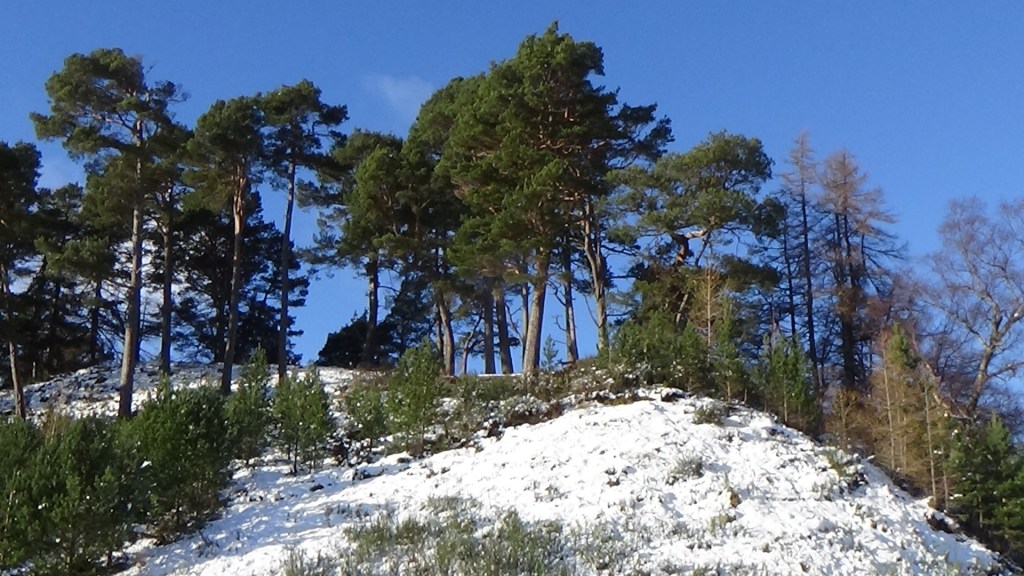
Aside from visiting Mar Lodge, we spent the bulk of our time outdoors listening to and recording the sounds we heard there. Pete will be using many of these recorded sounds in our finished work, working his magic with electronics. I wanted to understand how my sound on the viola might fit into this landscape, so took along a very cheap instrument that I didn’t mind playing as the snow fell. There was one wonderful moment under the new bridge when a curious robin came and sat by me. I like to think he was drawn by the music , and I think initially he was, but he seemed to take an equally keen interest in my cheese sandwich! Click on the image below for video:
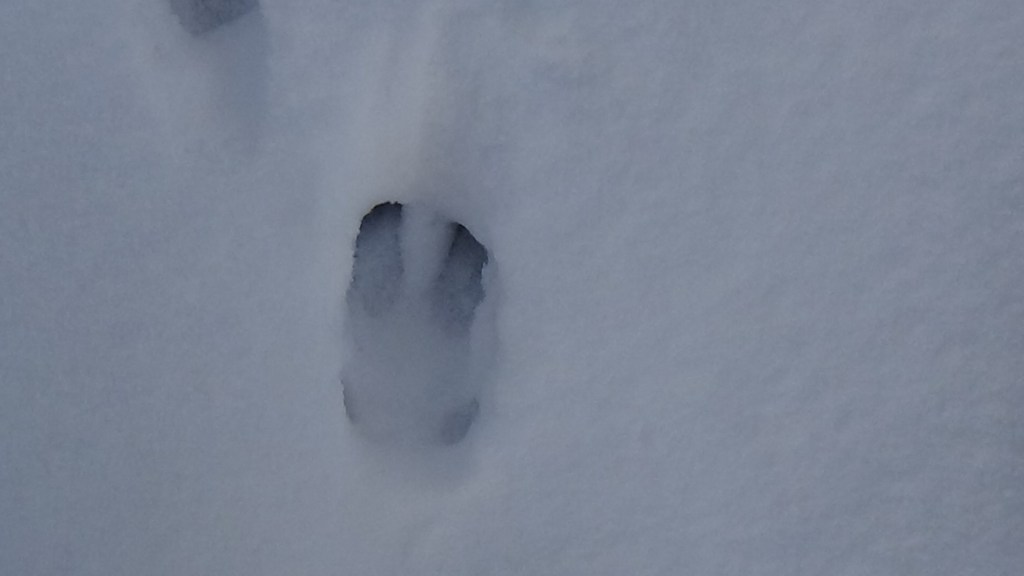
The weather on the first day necessitated a long walk to the glen in heavy snowfall, which I think was a good thing. It helped prime our ears to the environment and Pete and I took several recordings as we walked and talked. What struck all three of us was how the falling snow deadened the sound – almost like being in a soundproof studio. We felt (and were!) quite alone out there. Joe is really interested in the wildlife in the Cairngorms and his keen eye picked out red squirrels as well as identifying footprints in the snow. The snow really does give away the secrets of its inhabitants!
Bluebird Day!
Our second day in Glen Quoich was quite different: bluebird skies and dazzling white snow set against the bottle green of the pines. We recorded at the site of the old bridge on the floodplain before walking up to the Earl of Mar’s Punch Bowl. Wow, what an incredible and beautiful place. The water roared down the glen and we captured some really interesting 360 degree recordings.
Pulling it all together
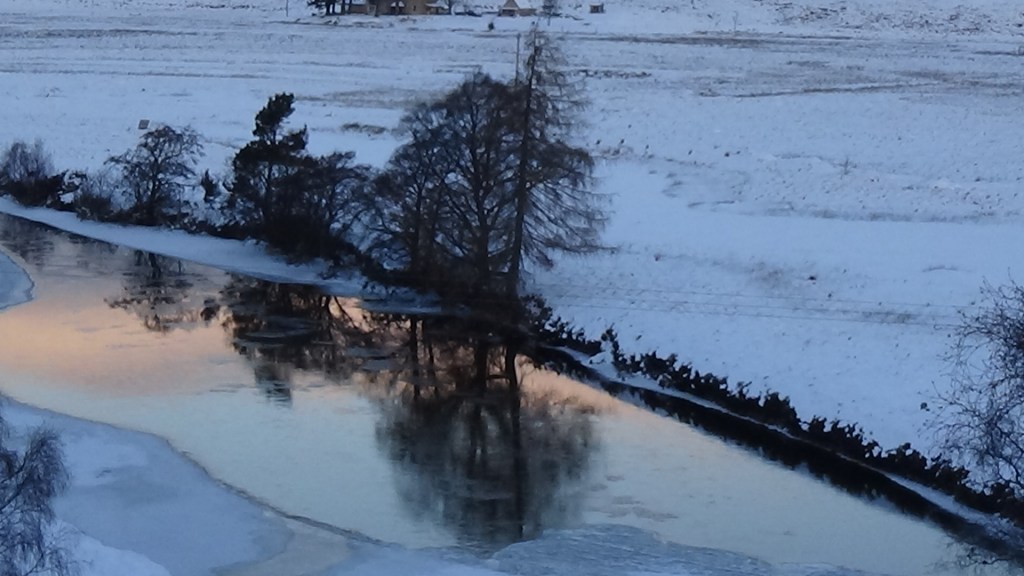
On our final day, we were really grateful to Andrew Braidwood of Braemar Gallery for letting us use his studio as a base as we explored ways of bringing all that we’d seen, heard and learned about into a programme of music. This is always the daunting part for me. I can never just sit down and put things on a page, so I set off in the blue light of a sub-zero morning for a walk in the Morrone Birkwood prior to meeting Pete and Joe to do some thinking, watching as the mountains and river reflected pastel pinks from the sunrise.
In the studio, Pete had already been working magic with river sounds, turning them into something quite otherworldly. Together we improvised with these and talked with Joe about composing a fixed viola line that can be recorded for me to improvise against live in performance. Joe has already composed a piece for me, called Deer Tracks, and we explored ways of exiting this acoustic world into the electroacoustic one.
Slowly a plan for the show emerged and we each have a list of compositional tasks to take away as we build our collaborative piece at a distance over the next few weeks. I like that this way of working, imposed on us during the pandemic, has become a way of working sustainably, avoiding the need for constant travel. Pre-pandemic we’d never gave thought to work in this way. Out of adversity….
Since we arrived home, we’ve multitracked a mock-up of how our river improvisation might sound, with Joe delivering a short written fragment for me to record and improvise with. Here’s a very rough, early sketch edited by me at home to give you an idea of where we’re heading with this:
Pete and I need to work on our piece about the “Muckle Spate” next. Speaking of which, we’d barely left Braemar when the river went into spate following a rapid thaw, as captured here by Ben Dolphin.
Our programme will also be including a new commission from Icelandic composer, Charles Ross and Deeside fiddler, Paul Anderson but I’ll tell you a little more about those pieces nearer our concert date.
Tickets now on sale!
Tickets are now on sale for our performance in Banchory at The Barn on 14th March and you can book them here. If you live too far away to come to our live performance, we will be recording it for a special online concert at a later date.
Podcast
Part 2 of our podcast series in which Joe, Pete and I chat to Aileen Sweeney will be coming shortly
If you missed part 1 from Shetland with Renzo Spiteri, you can listen here:
Supported by:


Discover more from nordicviola
Subscribe to get the latest posts sent to your email.

