

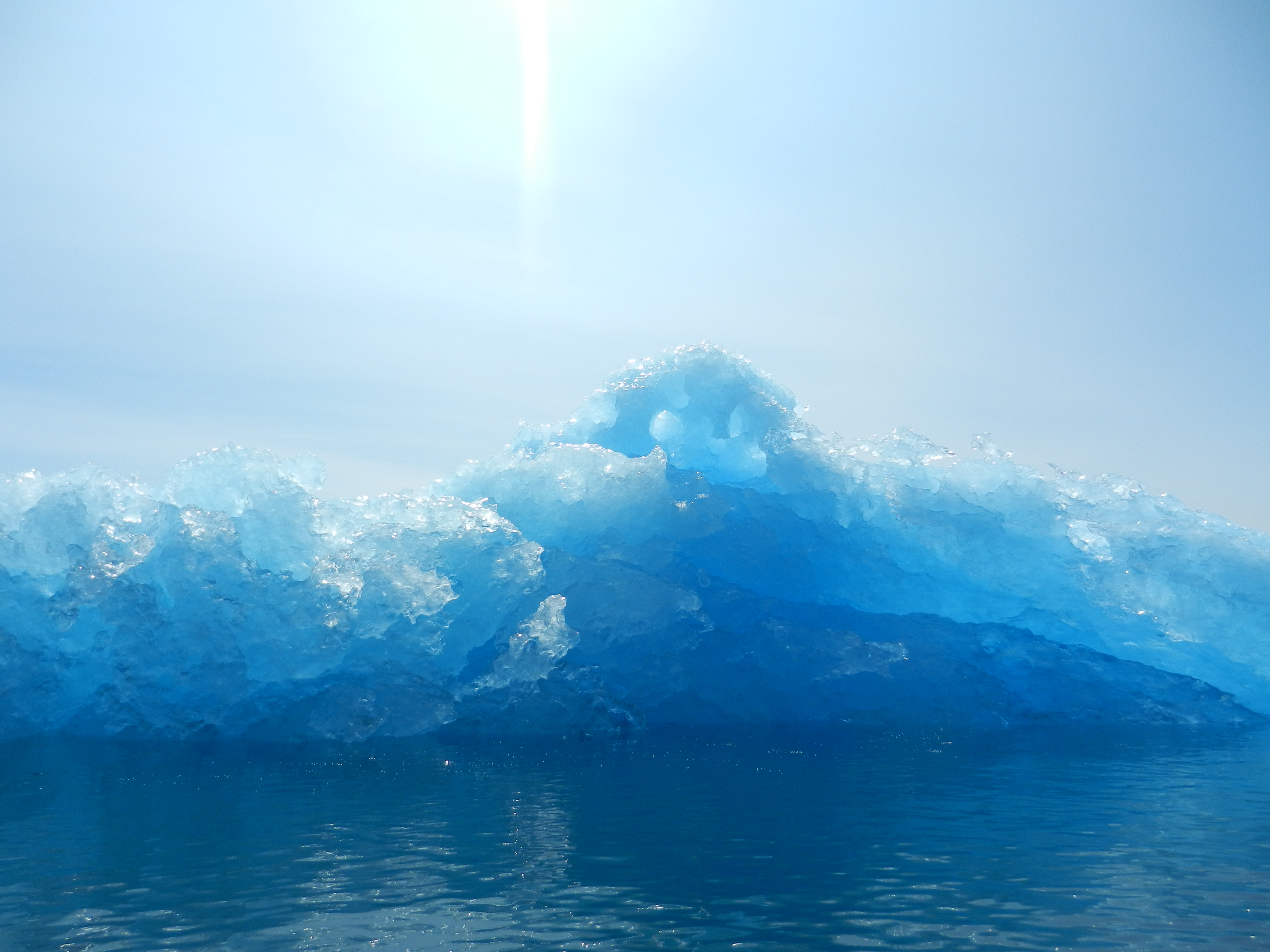
In a couple of weeks I’ll be premiering Karen Power’s polar soundings at soundfestival in Aberdeen on 24th/25th October. For me, the piece requires a long and immersive period of learning, so I thought I’d share the process with you over a couple of blogs as I learn the piece.
What is polar soundings?
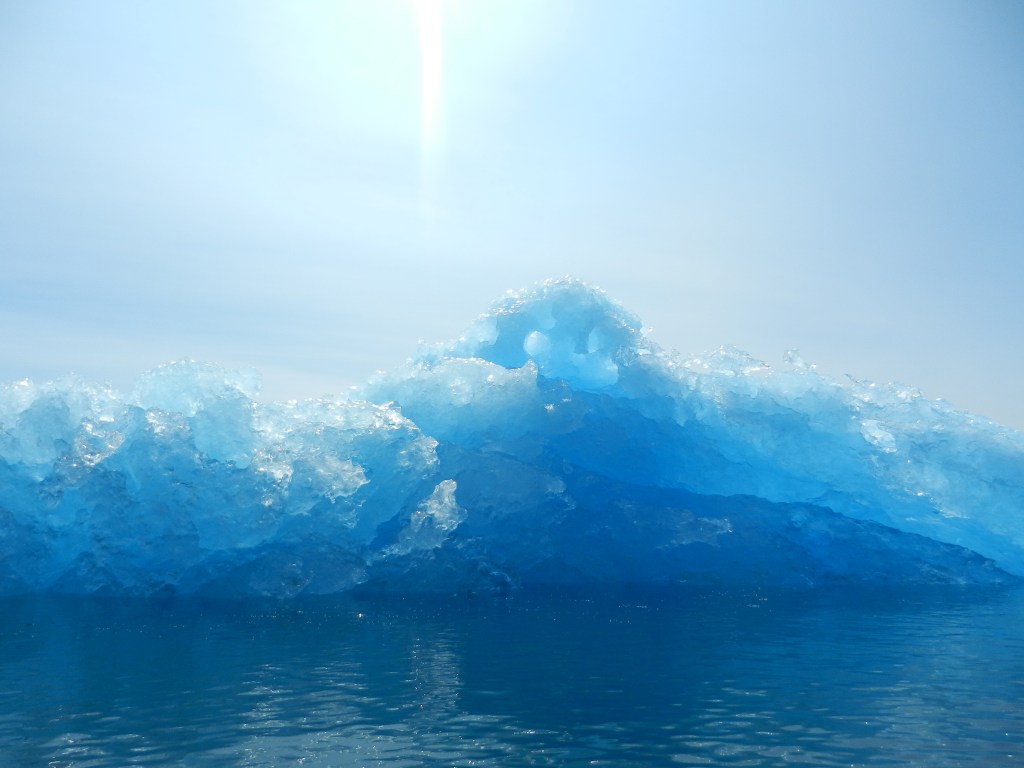
polar soundings is a unique piece: a 40-minute performance of a solo work for viola sits within a sound installation of the same name. polar soundings pairs the viola with sounds of deep, old & new ice present in the installation, encouraging new ways of close listening, & prompting reflection about the remote poles holding our planet together.
Arctic Conversations
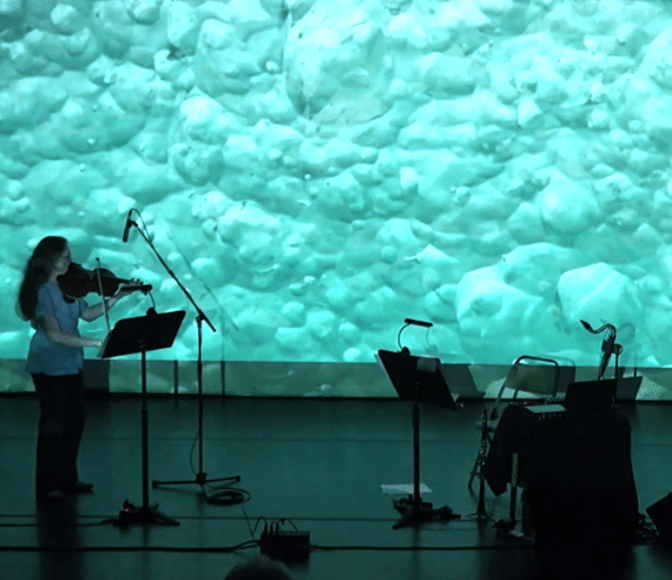
Karen and I’s connection goes back to 2021 when I performed Sonic Cradle at soundfestival. (I was honoured to perform it again at Arctic Science Summit Week at Edinburgh University in 2024.)
Over a few coffees, we learned that we shared an interest and fascination in natural sound and the process of listening as well as experience of the Arctic: Greenland for me and Svalbard for Karen. When Karen subsequently travelled to the Antarctic and then revisited the Arctic 10 years on from her first visit, it seemed like a natural fit that we should work together on a new piece.
Just to be clear, this is very much Karen’s composition: whilst we have worked together on it and I have a degree of flexibility in my part, the sounds, structure and overall direction of the piece are very much Karen’s.
How polar soundings came into being
I guess our story of the piece goes back to last year’s soundfestival when Fiona Robertson, sound’s director, offered us space to meet, listen to recordings, share ideas and come up with a plan to make this happen. This sense of community and generous sharing is one of the things that makes sound so special.
The melting ice caps
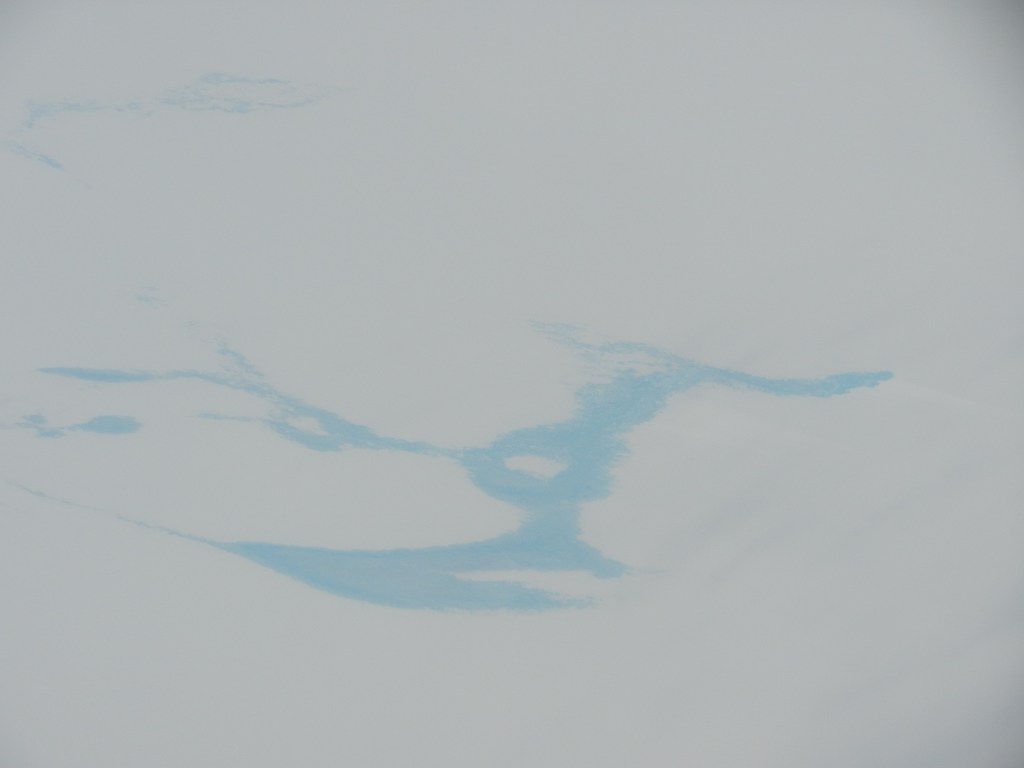
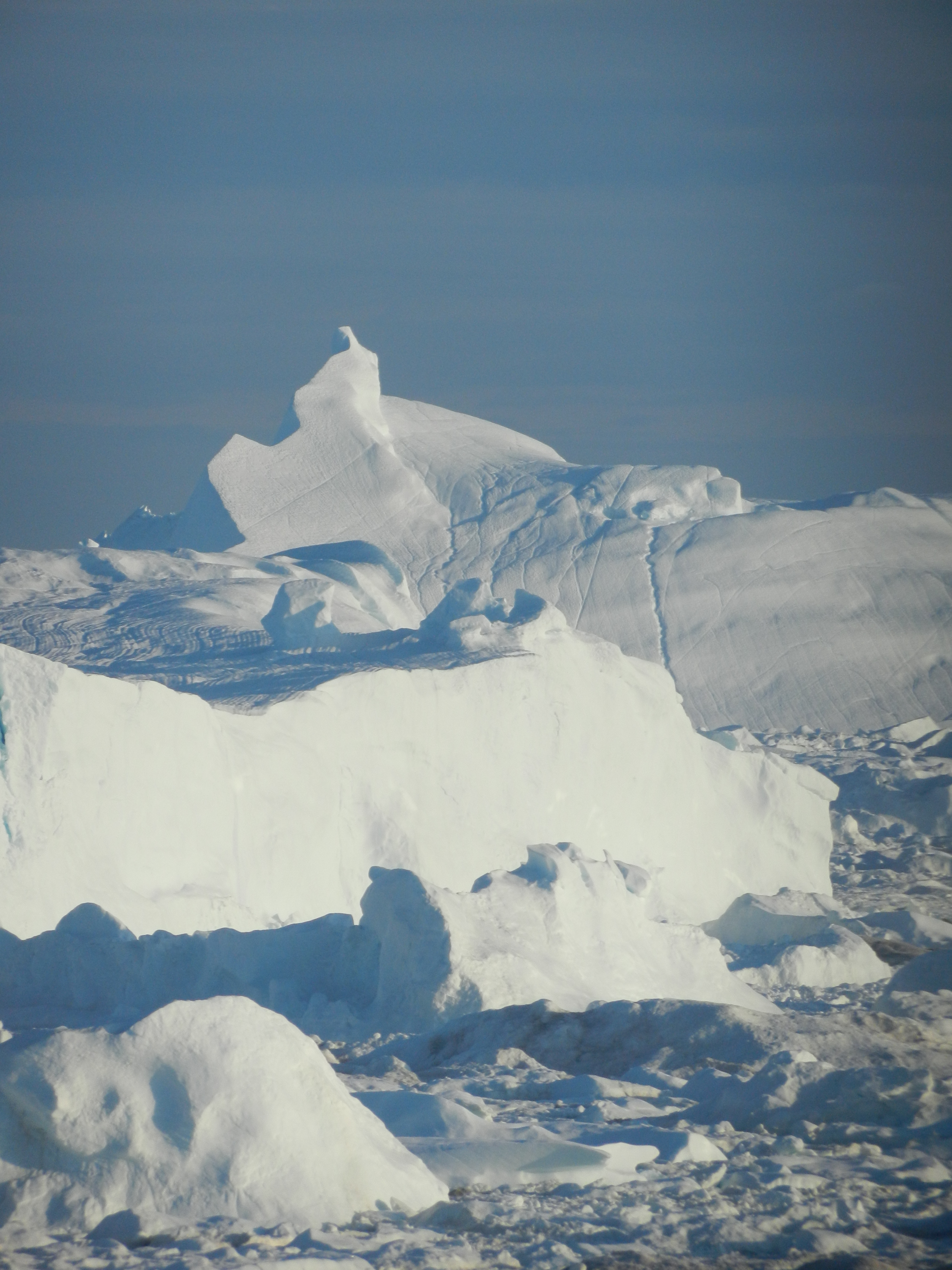
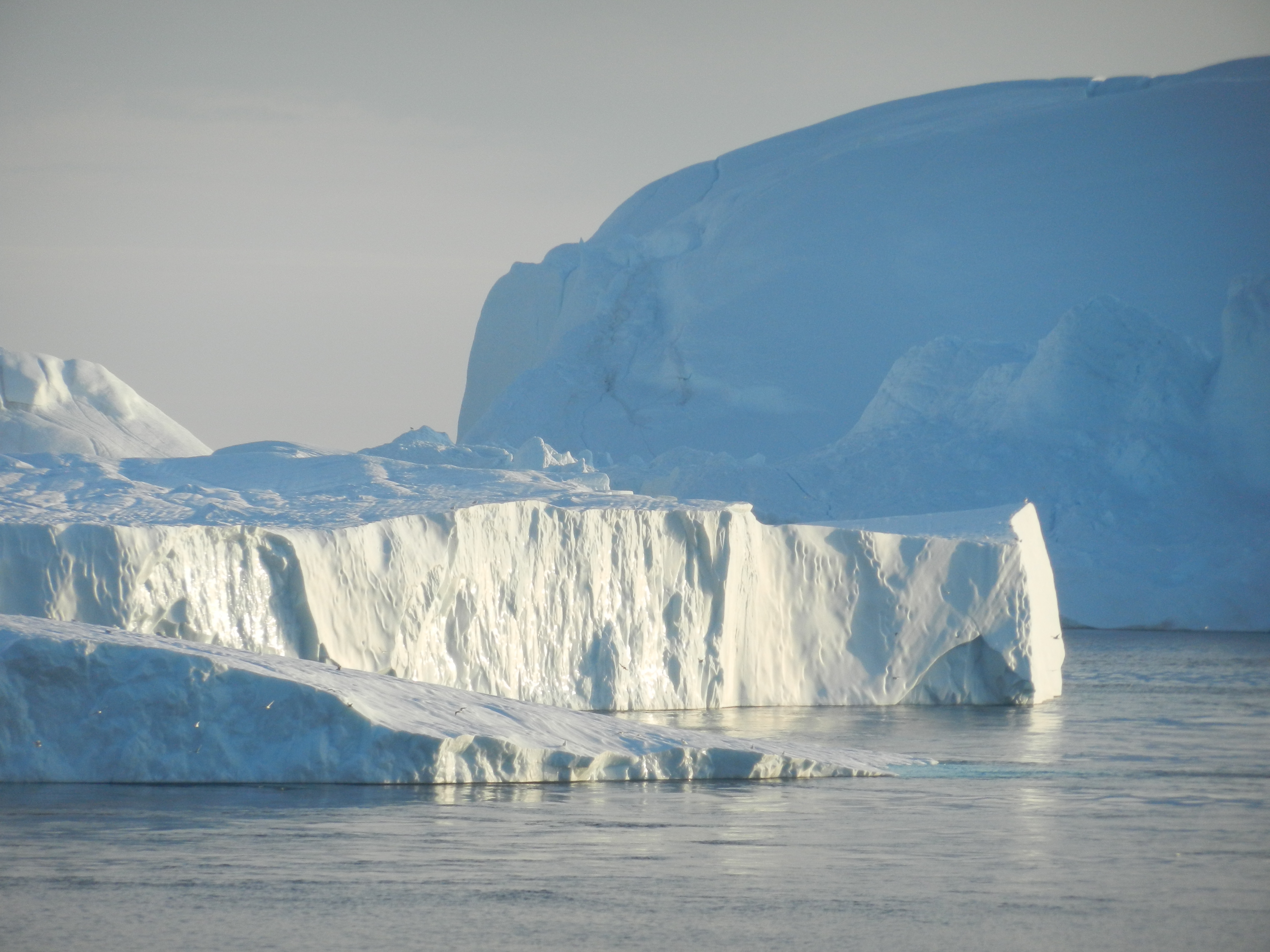
I was last in Greenland in 2019. I’m very much aware of how frighteningly quickly the ice cap is melting but to hear Karen’s more recent recordings of Svalbard was quite a shock. I think many people think of these extremities of the earth as being silent wildernesses. They’re not, of course: there’s often a howling wind and the ice is constantly shifting, creaking and turning. Then there’s the noise of water. But this much water? I was really shocked to hear the sounds Karen had captured. Amidst the brittle sounds of ice thawing slowly were torrents of water -really gushing and making a lot of noise. Karen showed me photos of receding glaciers, one of which, when it goes (perhaps in the not too distant future) is going to split its island in two. This is going to affect ocean currents around it. The story of our changing poles is a story that needs to be told.
Residency in Ireland
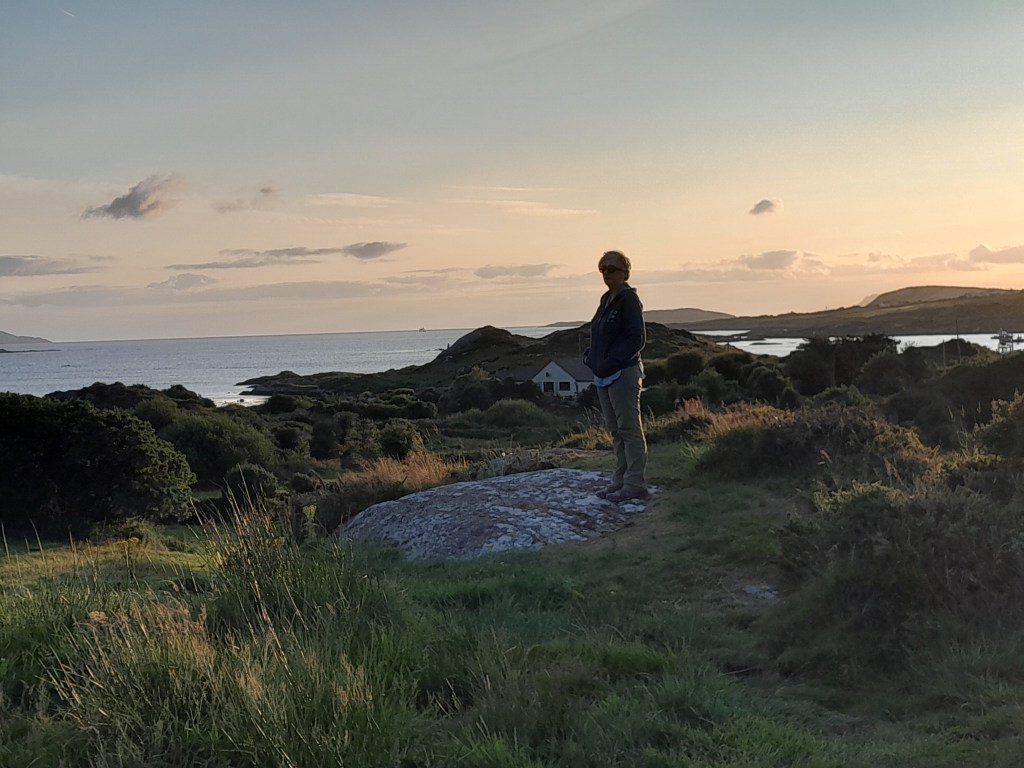
Thanks to a development grant from Creative Scotland, Karen and I met again on the Beara Peninsula in Ireland for a week’s residency. Why Ireland? It’s Karen’s home. Karen’s electronics gear makes it virtually impossible to travel without a car, though she uses a hybrid. As I can travel by ferry, train and bike, it made environmental sense for me to do the bulk of the travelling. The couple of days spent cycling across County Cork enabled me to slow down, be immersed in nature and ready to listen.
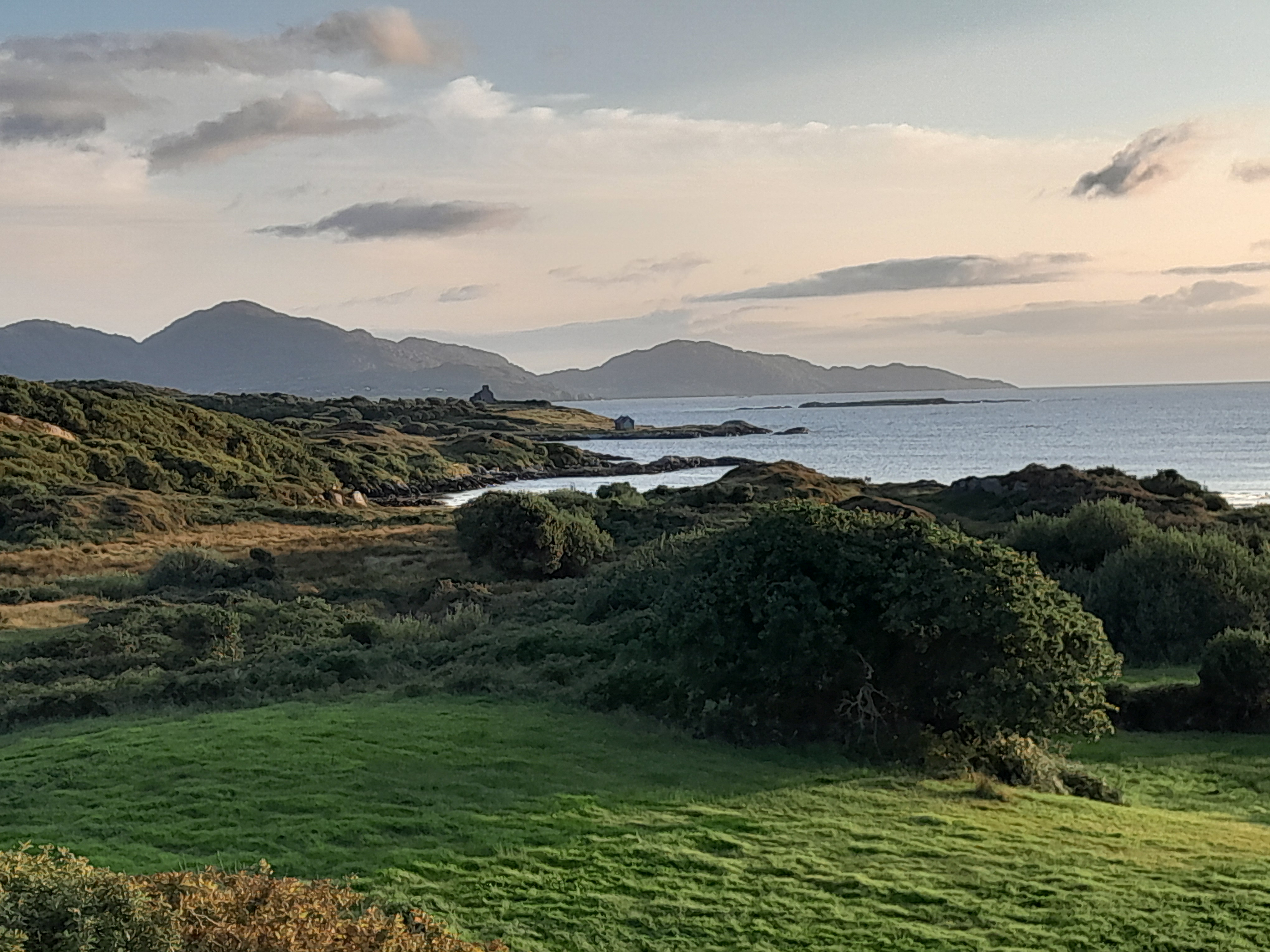
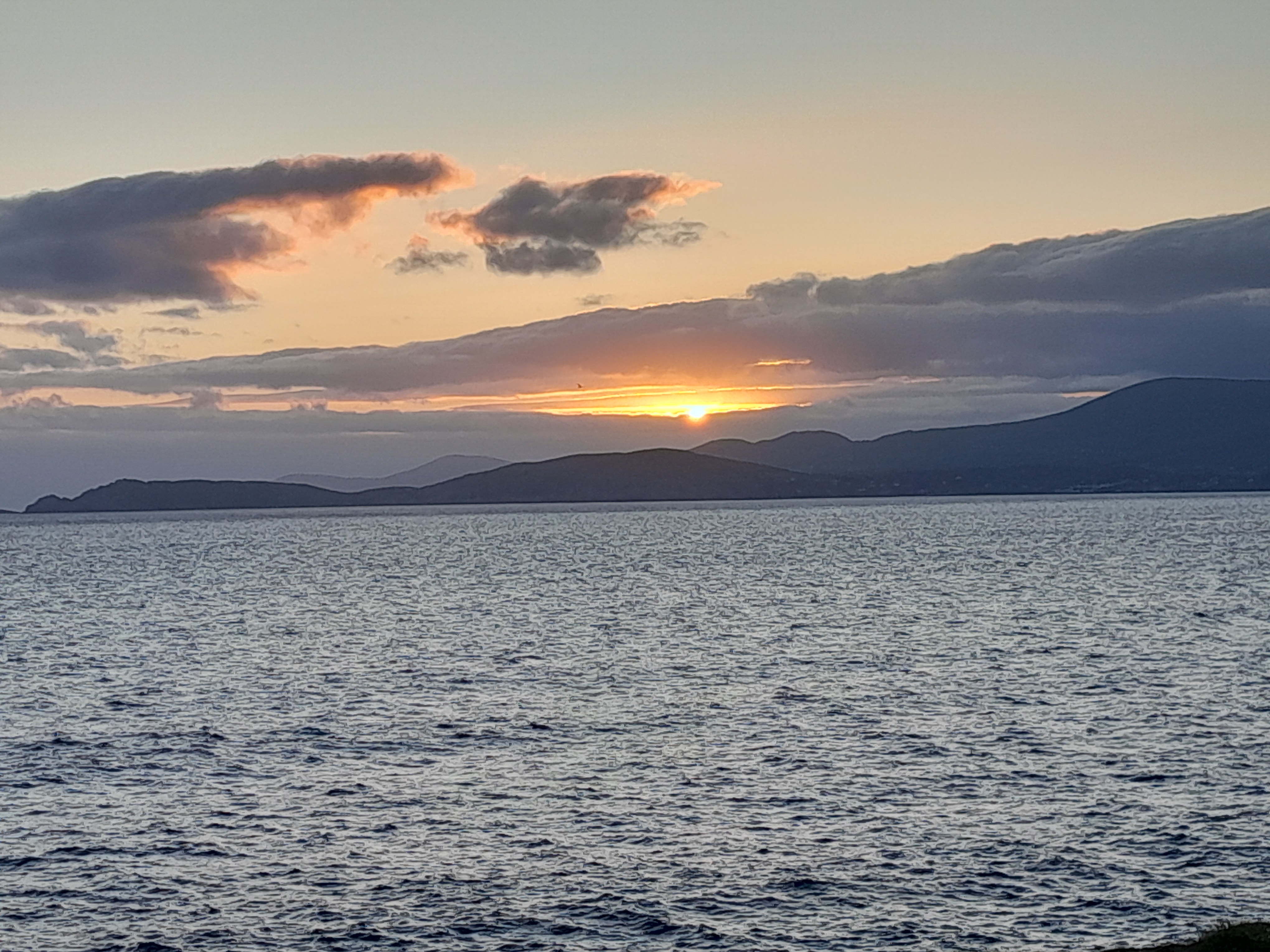
The importance of listening
Listening is absolutely central to Karen’s practice: listening, recording and discovering the uniqueness of every place through sound allows her work to share, enhance, respect and highlight both everyday and extraordinary environments and so it’s where our creative process had to begin. Sitting on floor cushions, back to the Atlantic coast, I listened and made notes to Karen’s extensive and utterly absorbing recordings, noting rhythms, pitches and textures.
The viola in the soundscape
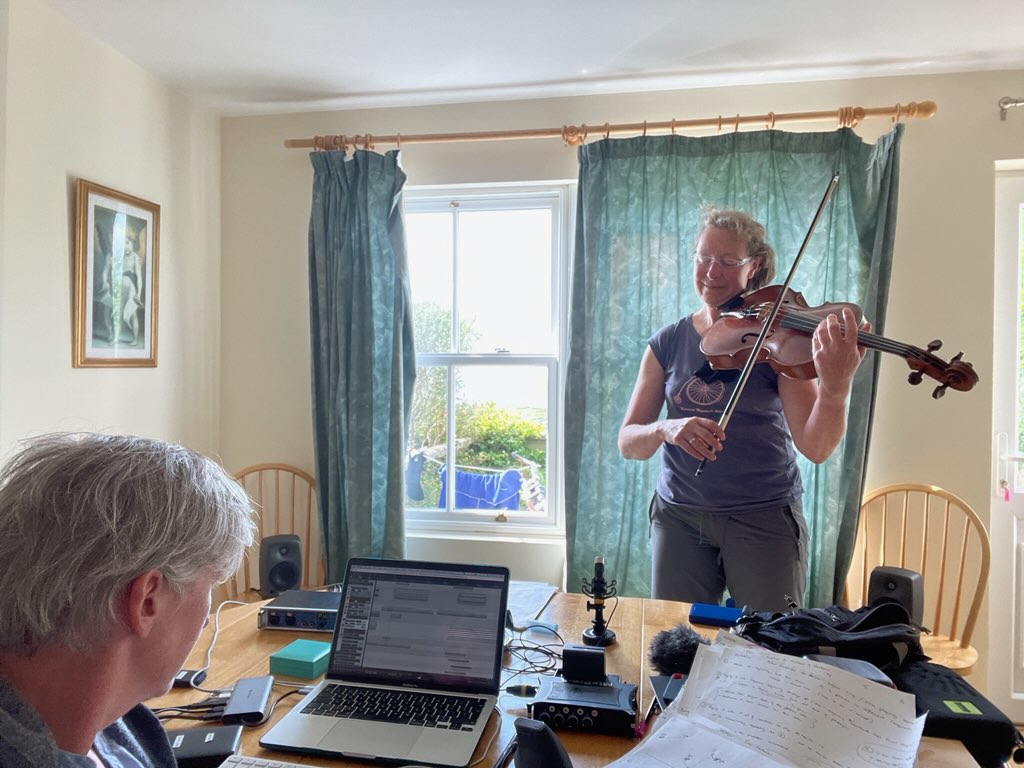
The scariest thing about any improvisatory process is getting the viola out of the box and starting to make sounds. But wow, what a palette of sounds I had to work with from these recordings. Over the five days, we explored alternative tunings and different techniques and textures that I could use. We explored blending with the ice and standing outside the soundscape as a human actor.
As we worked, I built up a palette of sounds on the viola. I love the things my instrument can do: change the tuning and a whole different set of colour and timbre opens up to me. Even though I have perfect pitch, it’s disorientating as all the resonance changes. But isn’t this disorientation precisely the point for a piece about our rapidly changing world?
So I left Ireland with a set of sample recordings in my pocket as reference sounds to keep me going whilst Karen set to the process of writing the piece. And what an exciting ( and daunting!) moment it was when I finally downloaded the scores and audio files. What a rich and beautiful aural score Karen has produced.
Learning polar soundings
After a week in Orkney in September (on a very different musical/poetical Arctic journey) I started to ease my way into polar soundings. Following a block of orchestral work, I’m now working much more intensively on the piece. It was good, though, to have some initial time to ease into the piece, gradually absorbing the sound world and my role in it.
So where am I at just now? Well, the first thing I’ll say is that it’s a very gradual process. As an orchestral musician I usually work quickly, learning new programmes every week. polar soundings isn’t like that. Karen’s score includes a set of instructions that involve listening and relistening over and over again: becoming increasingly familiar with the score.
Using an aural score
There’s the added challenge of having an aural part in my ear. This acts much as a conventional viola part would, only aurally, telling me where and how to play. I find it quite demanding on my brain but I know that, by gradually learning my part and growing accustomed to the two sets of sounds, I’m going to be completely immersed in this world come the performance.
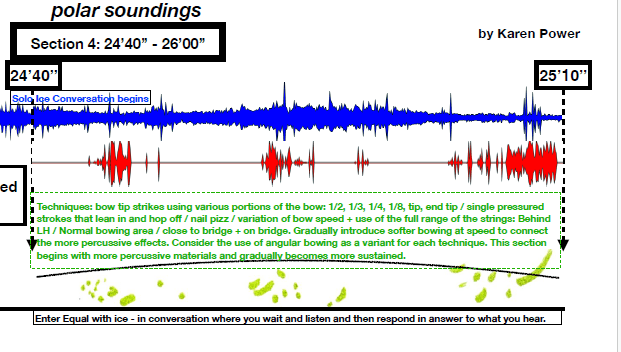
Just now I’m moving backwards and forwards between the palette of sounds we made in Ireland and Karen’s now structured score, figuring out where my early experiments in sound fit into the new picture. At first there was a slight feeling of going backwards, just because it’s much easier to improvise freely than it is to keep an eye and an ear on a clock, an aural part, a written score and my role as a human in this elemental world.
For now, I need to figure out my sounds technically, realise that this is a process that requires deep patience and then it’s back to another round of deep listening. So that’s where I’m going to leave you for now. If you want to keep up to date with the process, subscribe to this blog.
Performance Dates
Most importantly, if you’re anywhere near Aberdeen on 24th-25th October, then come up to soundfestival You can find details of polar soundings, including all the drop-in performance times within the installation, here.
soundfestival runs into the first weekend in November and there are so many thought-provoking, immersive, participatory and fun events to enjoy. Well worth a trip to Aberdeen!
Polar soundings was created with support from:


Discover more from nordicviola
Subscribe to get the latest posts sent to your email.


This looks excellent. Hoping to be there on 24th Oct. Looking forward to it!
Lesley H
Dr HL Harrison
lesleyharrisonpoetry.wordpress.comhttp://lesleyharrisonpoetry.wordpress.com/
northseapoets.comhttps://www.northseapoets.com/ [cid:19426db8-b7bc-434c-86ad-bf1fcc014c31] lesleyharrison123
KITCHEN MUSIC published by New Directionshttps://www.ndbooks.com/genre/poetry/ NY and Carcanethttps://www.carcanet.co.uk/cgi-bin/indexer?imprint=1 UK, May 2023.
DISAPPEARANCE, published by Shearsman, 2020. Shortlisted for the 2021 Michael Murphy Memorial Poetry Prize
LikeLike
Thanks Lesley. Hope to see you in Aberdeen.
LikeLike