

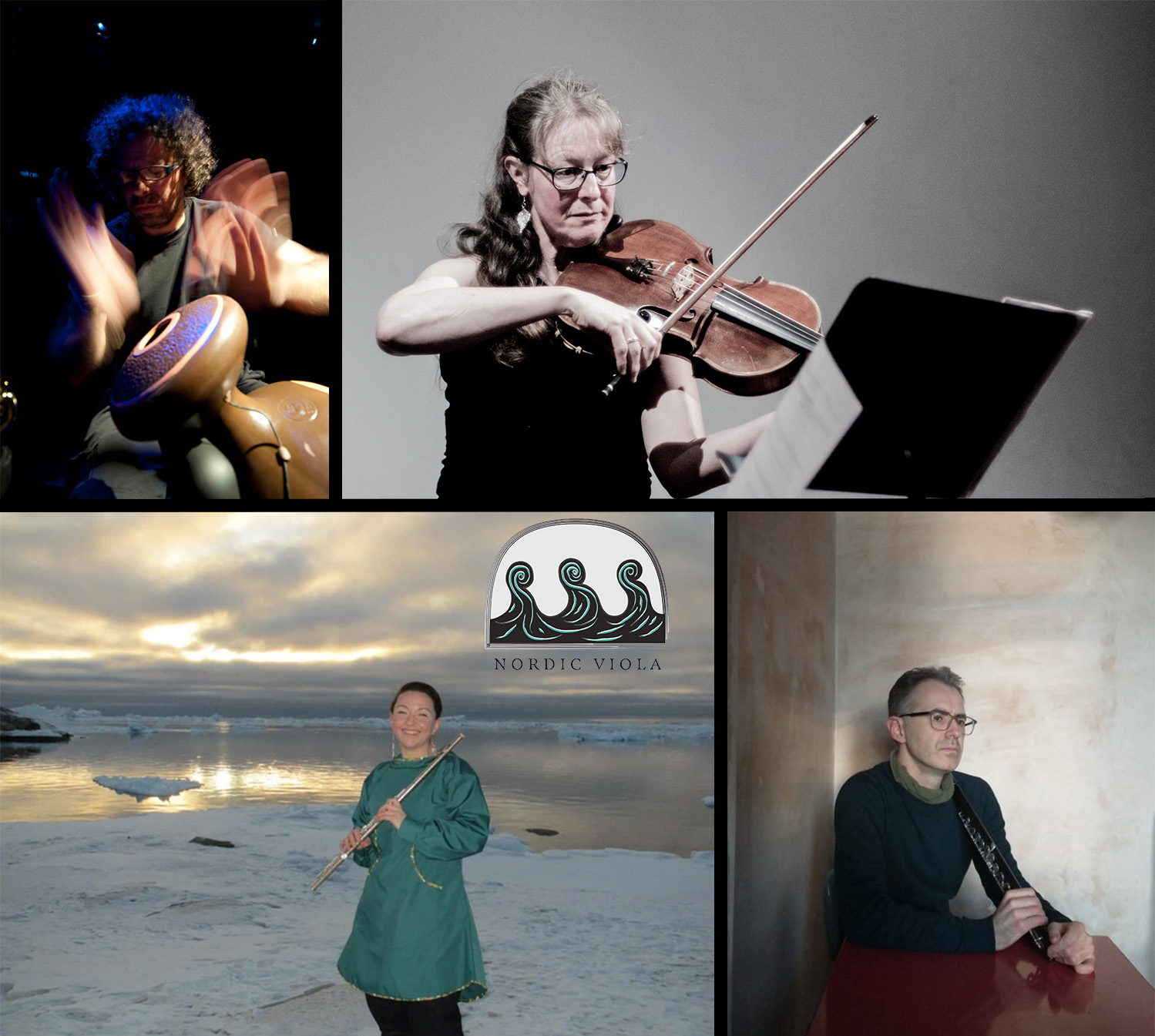
It’s now less than a month until Nordic Music Days comes to Glasgow and Nordic Viola has, of course, a very big part to play in this with Arctic Edgelands premiering at the CCA Theatre at 1pm on Saturday 2nd November and a presentation in the Nordic Music Days Conference at Glasgow University on 30th October entitled “On A Wing and A Prayer- towards a gentler way of working” in which I explore our approach towards the environment whilst working at Glen Quoich with Pete and Joe Stollery as well as ways of supporting each other’s diverse needs and ways of creating within a collaborative framework.
Arctic Edgelands by RenzoSpiteri, Arnannguaq Gerstrøm and Katherine Wren with Richard Craig (flute)
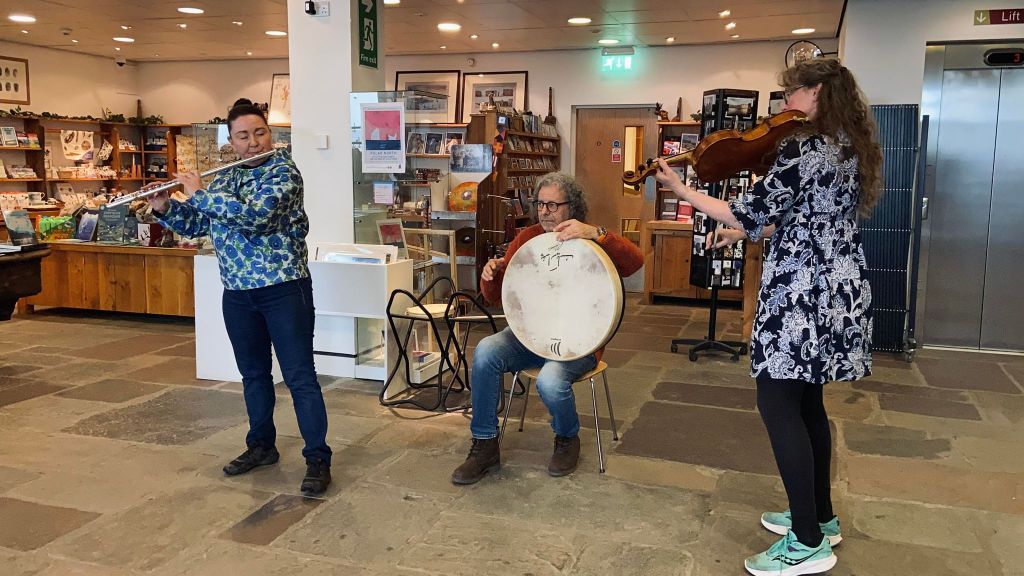
Photo: Gaby Giacchino
Arctic Edgelands is a project I’ve dreamed about for a long time, exploring the intersection between Shetland and Greenland at 60 degrees latitude and northwards with composers Arnannguaq Gerstrøm from Greenland and Renzo Spiteri from Shetland, both longstanding collaborators of mine. The three of us worked together in residence in Shetland last April and it proved to be a truly fruitful partnership with ideas flowing freely between us. We made lots of recordings of our work then and this has been the backbone of our musical development since.
Word of Mouth
Norse Settlers
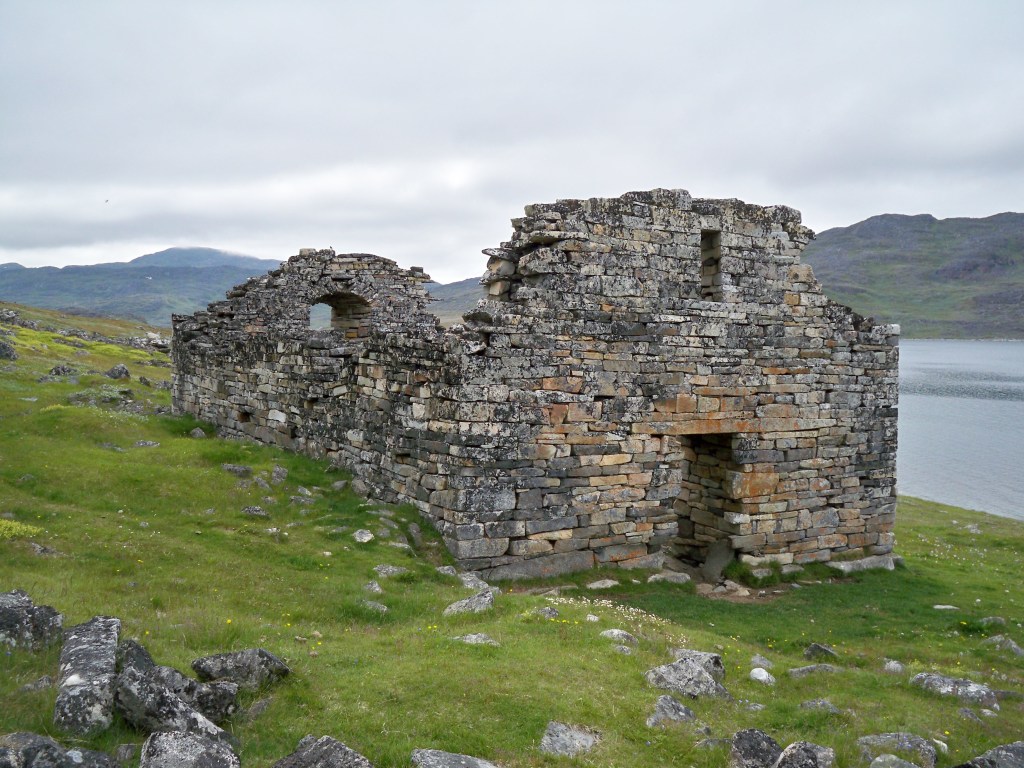
Hvalsey by Number 57 at English Wikipedia
The theme of Nordic Music Days this year is “Word of Mouth” and the links between Shetland and Greenland go deeper than perhaps many people realise. It may surprise you to know that only the southern tip of Shetland (Levenwick southwards and, of course, Fair Isle) are further south than the bottom end of Greenland. Both islands were colonised by Norse settlers. There are Norse archaeological sites in both places, notably at Jarlshof in Shetland and Brattahlið in Greenland. The Norse settlers were farmers so it’s no surprise that sheep farming is part of the culture of South Greenland as well as Shetland.
Nobody quite knows what caused the end of the Old Norse settlement in Greenland, though it’s likely that it was a sudden drop in temperature that left the farming Norse much more vulnerable than the hunting Inuit. The sea connection between Shetland and Greenland down the ages endured, though, with cultural exchange occurring through visiting fishing and whaling vessels. The Danes brought a fiddle tradition to Greenland and of course these tunes were readily shared with the Shetland fiddlers. Maurice Henderson’s fine book, “In Search of Willafjord” published by the Shetland Times explores these stories and comes highly recommended.
Sisimiut and Greenlandic Dogs

Willafjord may well be located close to Sisimiut, around halfway up the West Coast of Greenland. Arnannguaq originally comes from Ilulissat, slightly further north still, so we chose to travel our music further north to reflect both Arnannguaq’s heritage and these Greenland/Shetland cultural connections. We will include a piece based around a field recording by Arnannguaq of the sled dogs in Sisimiut. The sound of a pack of Greenlandic dogs is a sound that never leaves you once you’ve heard it. I don’t want to romanticise these animals though: they’re working dogs. Fiercely intelligent pack animals with more than a hint of wildness, they need discipline and a strong hierarchy and must be handled only by their owners. They really must not be approached but I’m lucky that a young, free-roaming bitch in Tasiilaq had other ideas and latched onto our group for a day walk. We quite literally had no choice in the matter. It was a privilege to have a window into her world, to watch her figure out the group hierarchy (at least in the sense of how that worked for her) and to watch her wonderful free and powerful movement across the snow. Once again though, I stress that these dogs must not be approached or touched – they can be incredibly dangerous and, indeed, following some fatalities, I think that even the pups and bitches are no longer allowed to roam free as they were in Tasiilaq back in 2015.
Migration and legends of the sea#
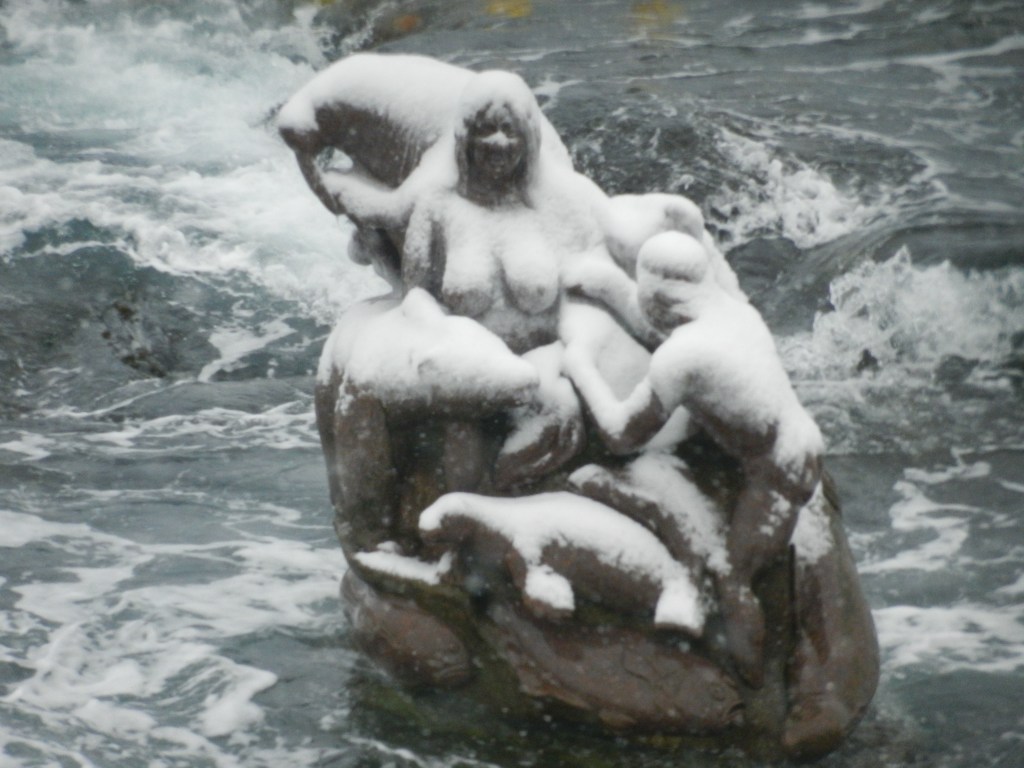
Dogs aren’t the only creatures we explore in our music. The sea is the great connector across which birds, sea mammals and humans migrate. We’ll hear the fierce, brittle sounds of Arctic Terns from Shetland contrasted with a calm, melancholic flute and viola duo. There are also shared stories of the deep. Shetland’s Sea Mither battles the fierce Teran during the equinoctal storms in September and March and Greenland’s own Sea Mother, Sassuma Arnaa, or Sedna, yields the bounty of the sea – or not. These shadowy figures lie behind the sonic melting pot that forms the climax of our piece, a stormy piece where all the elements of our music come together in a huge improvisation for flute, viola, percussion and electronics.
We’re very sad that on this occasion Arnannguaq is unable to join us, but very pleased to have Richard Craig on flute. Richard is a leading contemporary music performer and it was a great pleasure to play with him a couple of years ago at the Hidden Door Festival. Both he and Renzo are superb improvisers and I’m very excited about bringing that element of spontaneity into our performance.
Bára Gísladóttir

Renzo and I will also be performing “Laufgar” by Icelandic composer Bára Gísladóttir. I briefly met Bára at Mengi in Reykjavik back in 2019 and I’m a huge fan of her music which is truly unique. She is a double bassist as well as a composer and has absolute command of the colours that can be drawn out of string instrument. “Laufgar” is about leaves slowly unfurling in spring. You’ll need to listen closely as there are some intensely delicate sounds with fragile harmonics and tremolandi, coloured by resonances on bowed crotales (like little Indian cymbals) as well as suspended cymbal.
More from Nordic Viola’s friends at the festival
For most Glasgow audiences there will be lots of composers to get to know, but if you’re a follower of Nordic Viola, there will be a lot of familiar names. I am so pleased to see such a focus on Greenland with Qullaq being performed in the opening concert, and on Arnannguaq’s music in particular.
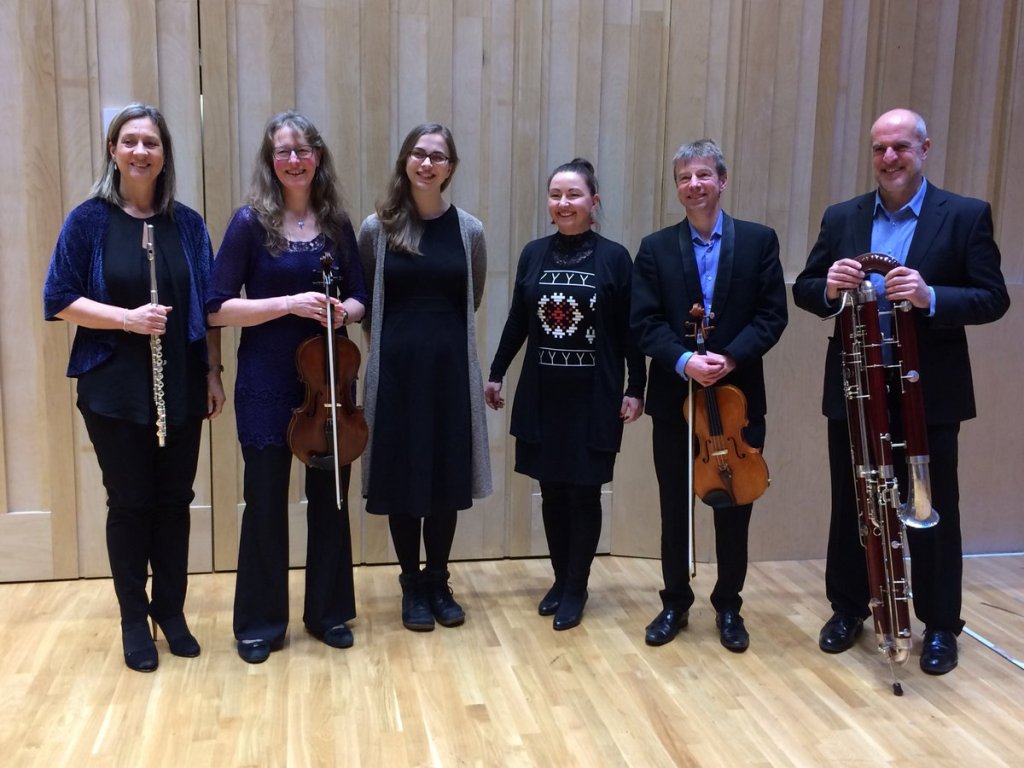
Of course it’s not the first time that Arnannguaq’s music has been performed here: we premiered Ukioq in the New Auditorium at the concert hall in January 2018 and it’s also on our album, Elsewhere, Elsewhen, which you can buy here. Back in April I saw the score for Arnannguaq’s piece Annilaanganeq qilammit nakkaalavoq for strings and voice and I’m very excited that, following its Faroese premiere last July, it’ll be performed in Glasgow by the Chaos Quartet and friend and colleague Stephanie Lamprea. Arnannguaq is a superb ambassador for her country as well as being such an expressive and instinctive musician. Despite being trained predominantly in Scandinavia, there is such a strong sense of the sounds of Greenland and of Inuit music in her musical language – a sense of another place. I have learned so much from her and I hope that people in Glasgow connect deeply with her music.
Faroese music
Another performance I am eager to hear is Faroese composer Eli Tausen á Lava’s first foray into orchestral writing for the BBC Scottish Symphony Orchestra on 31st October. We’ve just taken Eli’s music on tour to Orkney with our Faroese friends, Aldubáran and audiences really enjoyed it there.
There’s more Faroese music from the ever inventive Kristian Blak with Dávur Juul Magnussen, principal trombone and a colleague of mine in the RSNO. Using the generous acoustic of Glasgow Cathedral on Sunday 3rd November, they’ll be recreating the famous Faroese Cave Concerts in Echoes from the Edges. You may remember Dávur and I doing one of these back in 2018 – an occasion I’ll certainly never forget.
Danish music
Also on 3rd November, my RSNO string playing colleagues will be playing traditional music from Last Leaf and Woodworks by the Danish String Quartet. Nordic Viola’s audiences will recognise “Dromer” which ends our Sagas and Seascapes programme.
Scottish Music
There will, of course, be plenty more music from Scotland at Nordic Music Days. Two familiar faces from Nordic Viola’s On A Wing and A Prayer series make an appearance in the RSNO concert on Saturday 2nd November. Lisa Robertson has written “Change is Coming”, to be performed side by-side with the Big Noise Govan orchestra. Lisa was finishing this piece when we were working together on “On A Wing and A Prayer – Morvern” and it’s going to be a lot of fun for players young and old(er) alike. The orchestra will also be playing Aileen Sweeney’s “Glisk”. Nordic Viola’s audiences will know Aileen as our podcast host, but she’s an amazing composer, too, and her music is very much on my list of pieces to programme in the future. Nordic Viola duties mean that I won’t be playing in “my” orchestra on this occasion, so I’ll have the unusual luxury of listening this time. With Sibelius’ fabulous 7th Symphony on the menu, that’s going to be a real treat.
More information and tickets
Nordic Music Days Glasgow is a one-off chance to hear the most exciting new music from the Far North in one place, so if you’re a fan of Nordic music and culture seize it with both hands, be adventurous in your choices and embrace winter with this feast of sounds from the Far North.
Tickets for Nordic Viola’s concert are here.
And there is much more information on the festival as a whole here
Discover more from nordicviola
Subscribe to get the latest posts sent to your email.


I love these posts ….
Lesley hx
Dr HL Harrison
lesleyharrisonpoetry.wordpress.comhttp://lesleyharrisonpoetry.wordpress.com
[cid:2641df8d-7874-4a54-ae72-7b454ae6c442] lesleyharrison123
KITCHEN MUSIC published by New Directionshttps://www.ndbooks.com/genre/poetry/ NY and Carcanethttps://www.carcanet.co.uk/cgi-bin/indexer?imprint=1 UK, May 2023.
[cid:243b7223-cd3b-4f4f-9d33-ffd1c8b894c9] [cid:6874271f-472e-430a-b66a-bc984c04ac13]
LikeLike
Thank you Lesley. Hoping you’ll be able to make it to Glasgow for Nordic Music Days. There is much of interest to explore.
LikeLike
Yes – hoping to see you in Glasgow on Sat 2nd Nov. Looking forward to it!
LikeLike