

February has been such a hectic month that I’ve not had time to tell you about my visit to Iceland at the end of January, so it’s time for a quick catch-up blog!
Winter in Iceland
It’s been a long time since I’ve been to the Far North in the depths of winter. In fact, I was surprised to figure that, actually, I haven’t travelled this far north in January since I was in Greenland for a month in 2017.
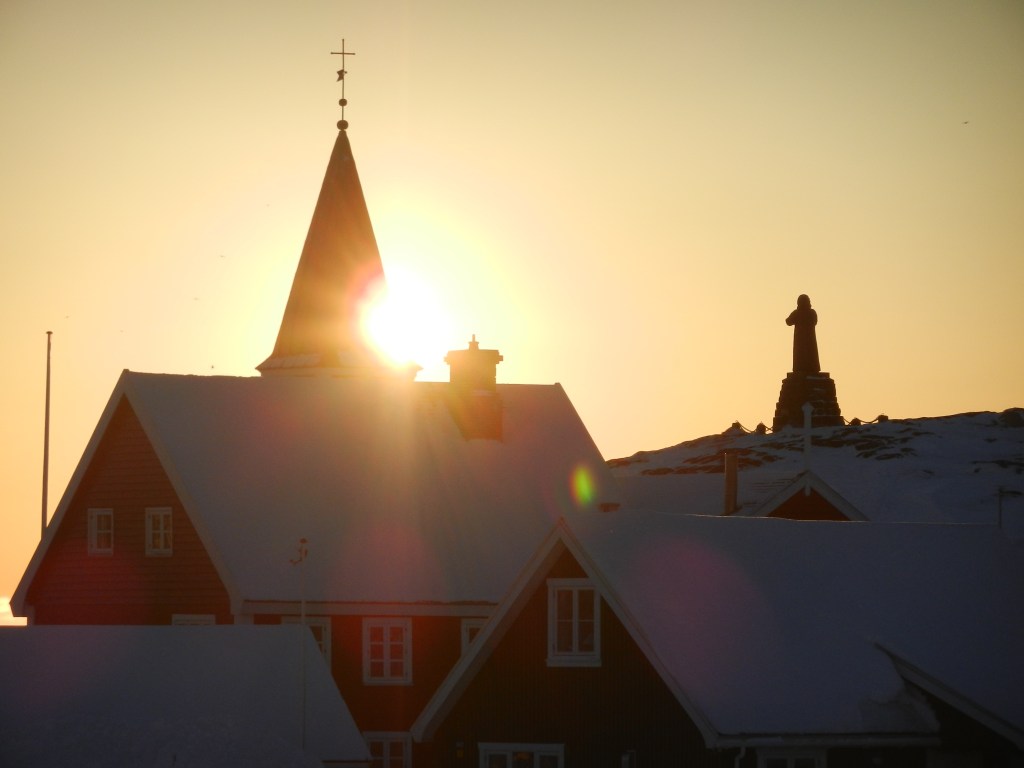
If there’s one thing I learned during that month, it was to embrace the darkness rather than fighting it. Of course, coming from the UK, that’s a lot easier to do in Iceland than in Greenland as there’s no jet lag to deal with, so you’re not waking up at 5am and then fighting to stay awake at teatime! Set against that is the fact that Iceland is an awful long way west to be on GMT, so sunrise was as late as 10:30am, though there was daylight until around 4pm.
When you tell people that sunrise to sunset is just 5 hours, they expect it to be dark all the time. Absolutely not the case. Even Scotland has only 6 hours dawn to dusk around the solstice. What both countries have is lingering twilight and, as you’ll see later, this produces stunning light.
Arriving in Reykjavík
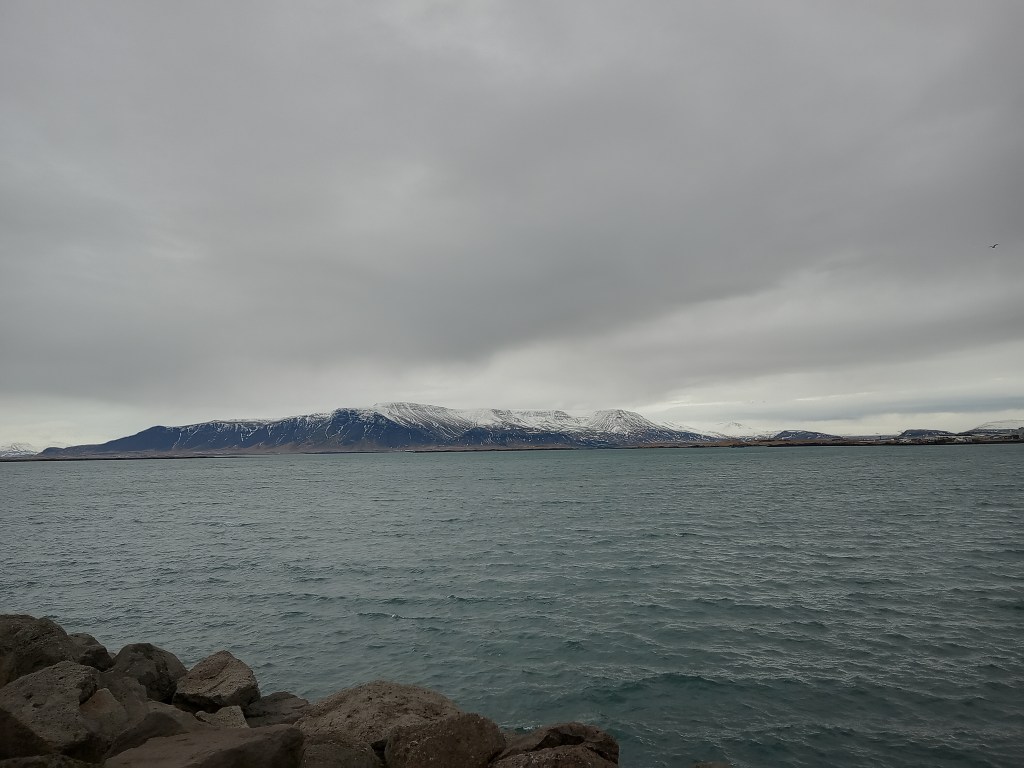
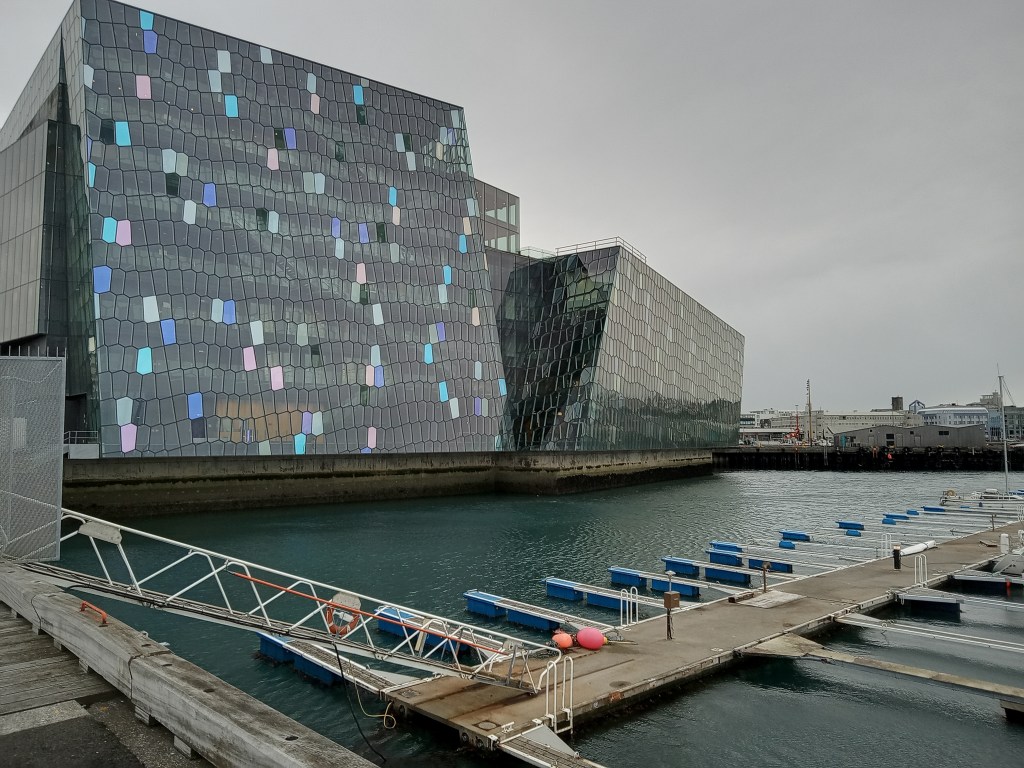
I landed in typically bleak Reykjavík January weather – grey, breezy and raw! Lovely to catch up with friends, though. I spent the afternoon walking along the seafront, taking in mount Esja with its snow cap and the wonderful deep, cold grey-blue of the water whilst listening to the wind whining through the masts of the boats outside Harpa. A ghostly, eerie sound.
After tea I hooked up with my great friend and pianist Arnhildur Valgarðsdóttir and we headed to Fella og Hólakirkja where she is organist to play together in the service. The choir are so friendly and it was great to hear their memories of playing in Dunblane Cathedral a couple of summers ago – an occasion I sadly missed.
And on to East Iceland
The following morning I was up well before dawn (not that early!) to catch a flight to Egilsstaðir in East Iceland, only a huge snowfall out east meant I ended up wandering back into town for a second breakfast as my flight was delayed. That did, however, come with the bonus of experiencing Tjörnin (the lake in town) at its most magical. In the indigo half-light, the whooper swans, penned into a small ice-free corner, called mournfully as the greylags cackled.
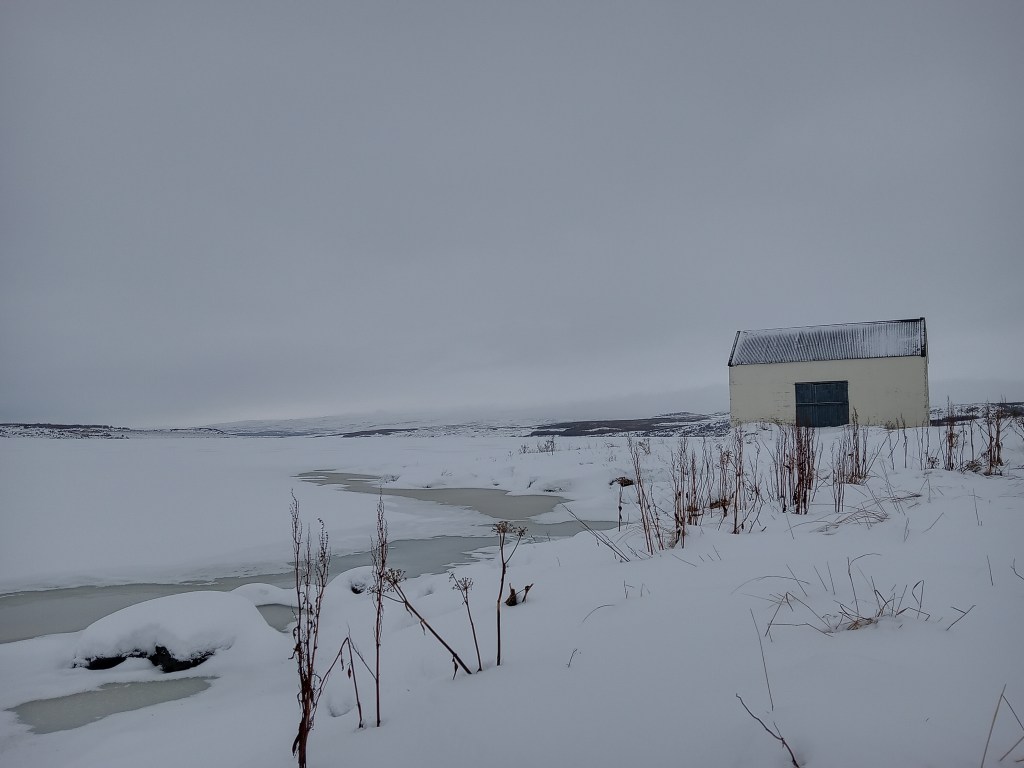
The delay also brought the benefit of flying over Vatnajökull glacier in daylight. We didn’t have the best visibility but I could see rings of cloud condensing over some of the calderas up there and I never tire of seeing the mighty rivers that pour from the glacier, their multiple braids converging into one huge river which then feeds the Lagarfljót, the huge loch by Hallormstaður and Egilsstaðir that holds endless fascination for me with its milky green depths said to be home to a monster! In fact the first thing I always do on arrival is pop down to this picturesque hut on the lakeside:
Daily Life and teaching in Egilsstaðir
Egilsstaðir feels like my Icelandic “home” now. Although the town itself is home to just 2,500 people, I still prefer staying in the small hamlet of Eiðar.
I soon settled into a routine of travelling into town early in the morning with composer-friend Charles Ross and waking up slowly and gently in the town’s outdoor swimming pool. Swimming is a huge thing in Iceland – it’s where people gather to relax and socialise as well as swimming for sport. It was magical to swim early with thick fog over the water when the air was just minus 10. There’s something special about being enveloped in warm water whilst your face is in the cold air. And then of course there are the hot tubs and plunge pools. It really gets your circulation going in the morning. When you feel good and ready, you get a coffee poolside in the freezing air and then go and face the day.

Daily work for me this week was teaching a member of staff from the music school as professional development. Teaching over an intense period of a week was a new thing for me. It extended my own teaching practice and I enjoyed it a lot. There was also time to teach the string students at the school in a group masterclass. The set-up in the Nordic countries is something the UK could most definitely learn from.
Daytrip to Seyðisfjörður
Midweek I was invited by two of the music school staff to join them over in Seyðisfjörður. Seyðisfjörður (population ca. 600) is the first place I went to on sabbatical in 2016. It is in a stunning location at the end of a narrow fjord and I was very eager to see it in winter. Just the day before it had been cut off by snow over the high mountain pass, Fjarðarheiði, and people had been evacuated due to avalanche risk.
Leaving at 8:30 we got to experience that magical light I talked about earlier. 2 hours before sunrise and already there was a glimmer of light to the south-east and then – well, I think I should let the pictures tell their own story. It really was the most magical dawn I have ever, ever witnessed.
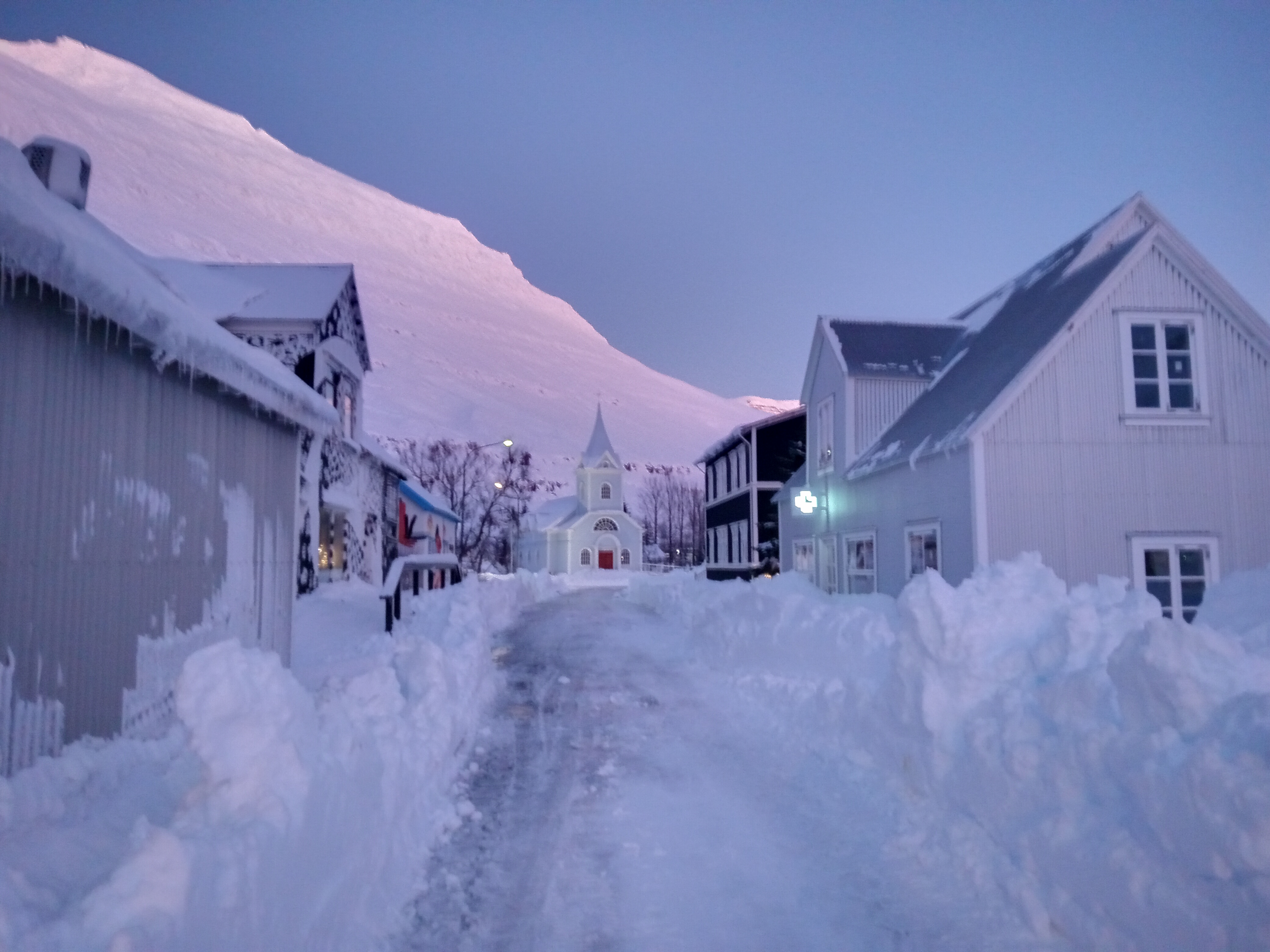
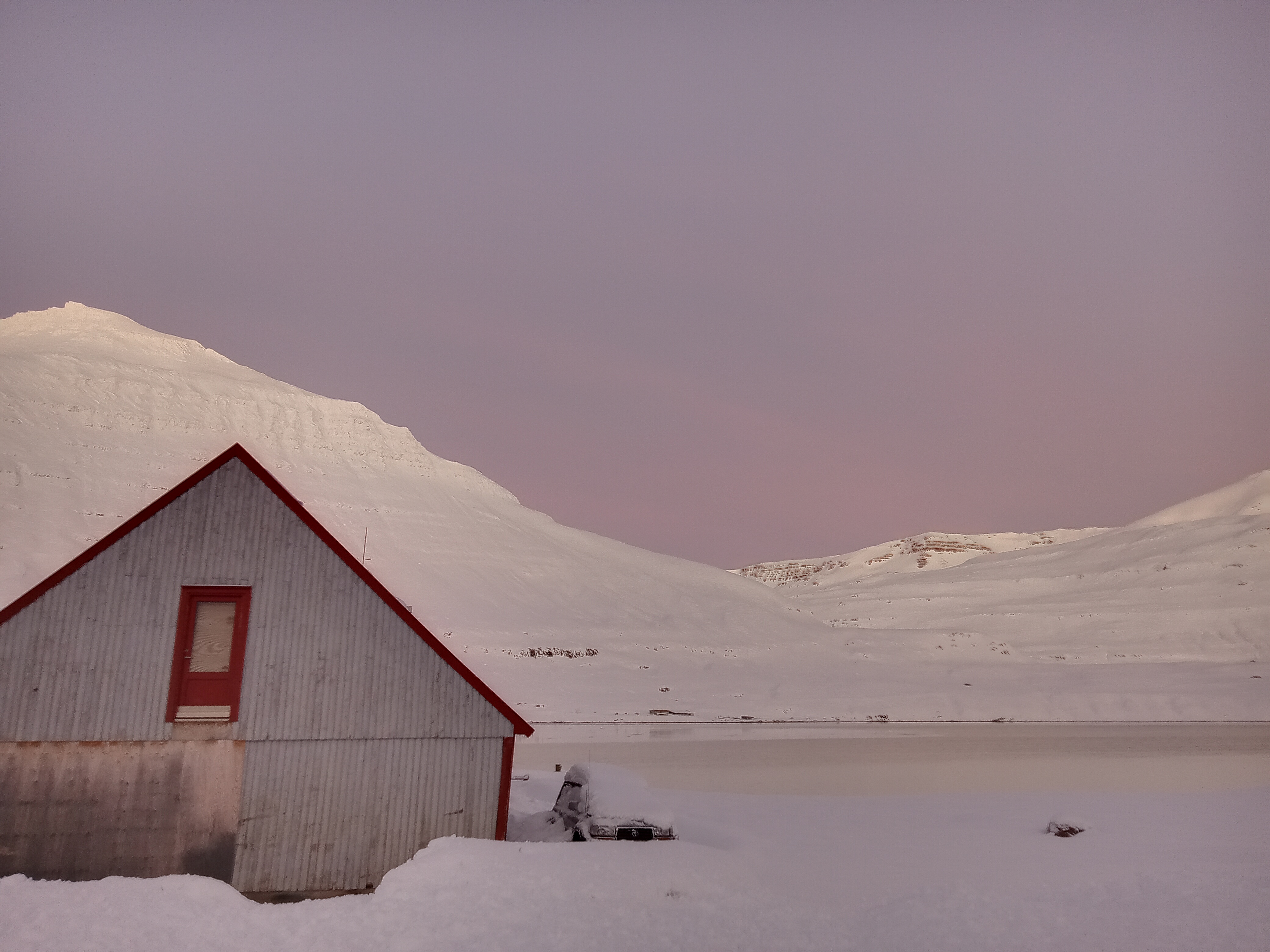
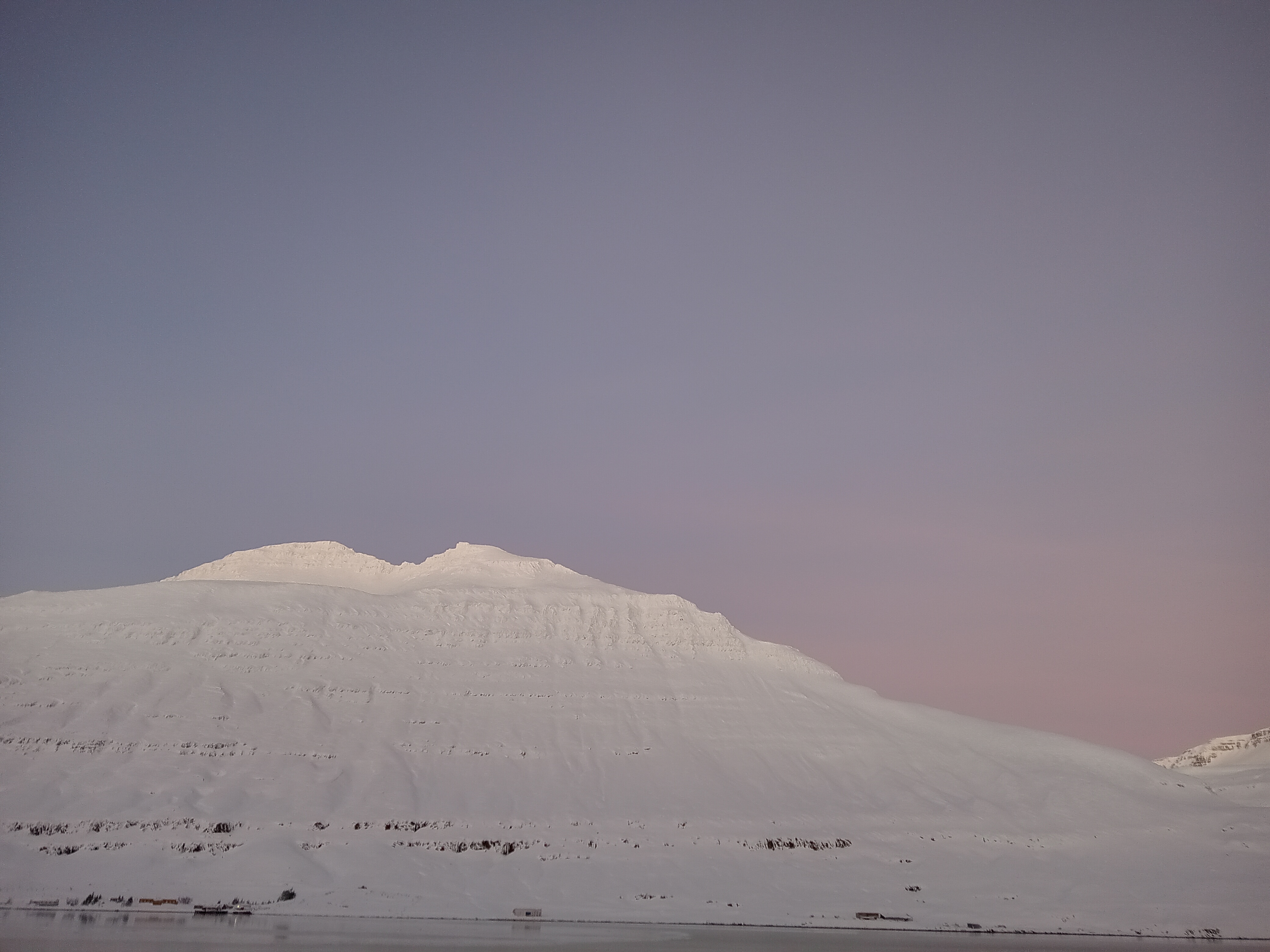

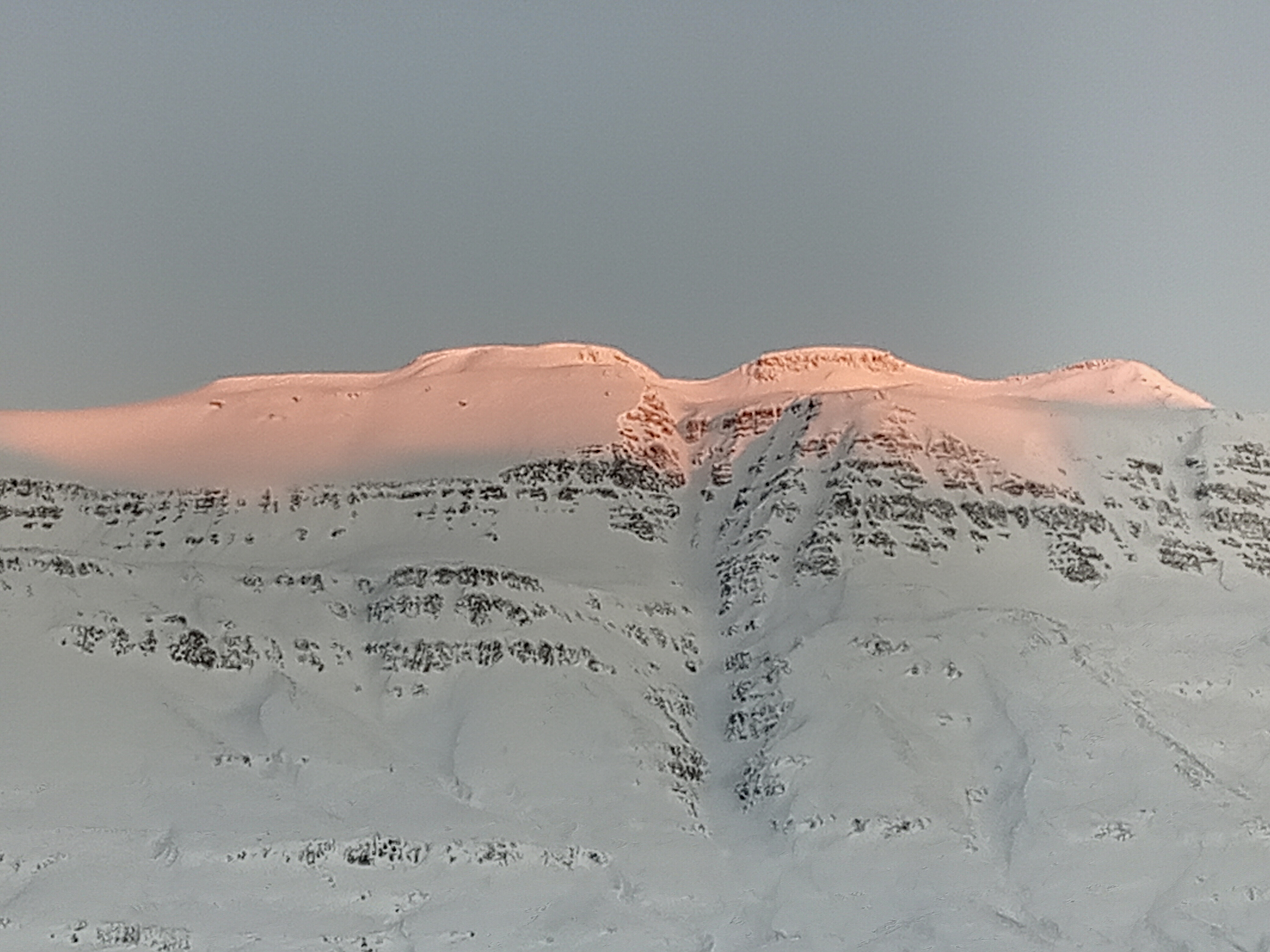
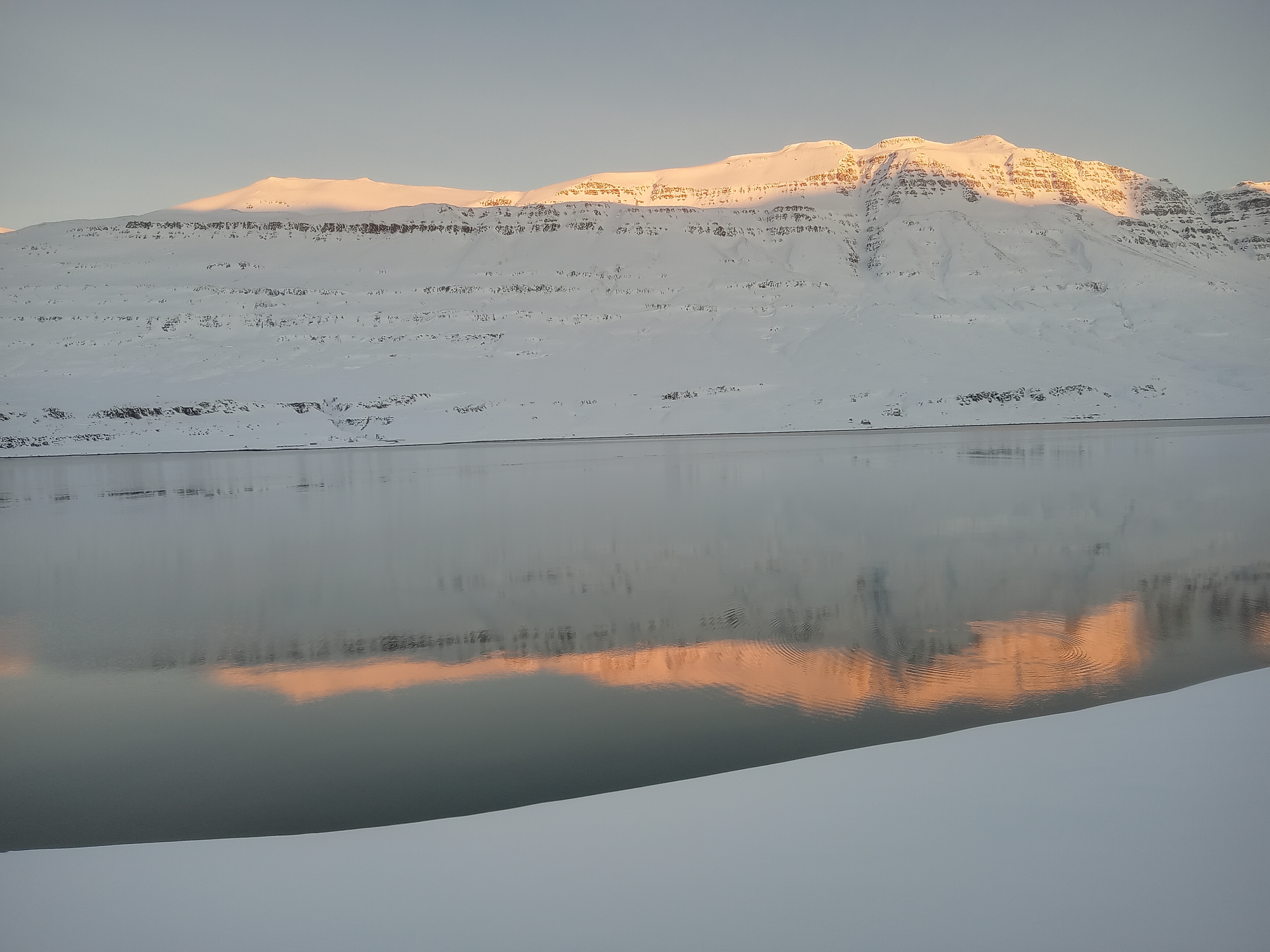
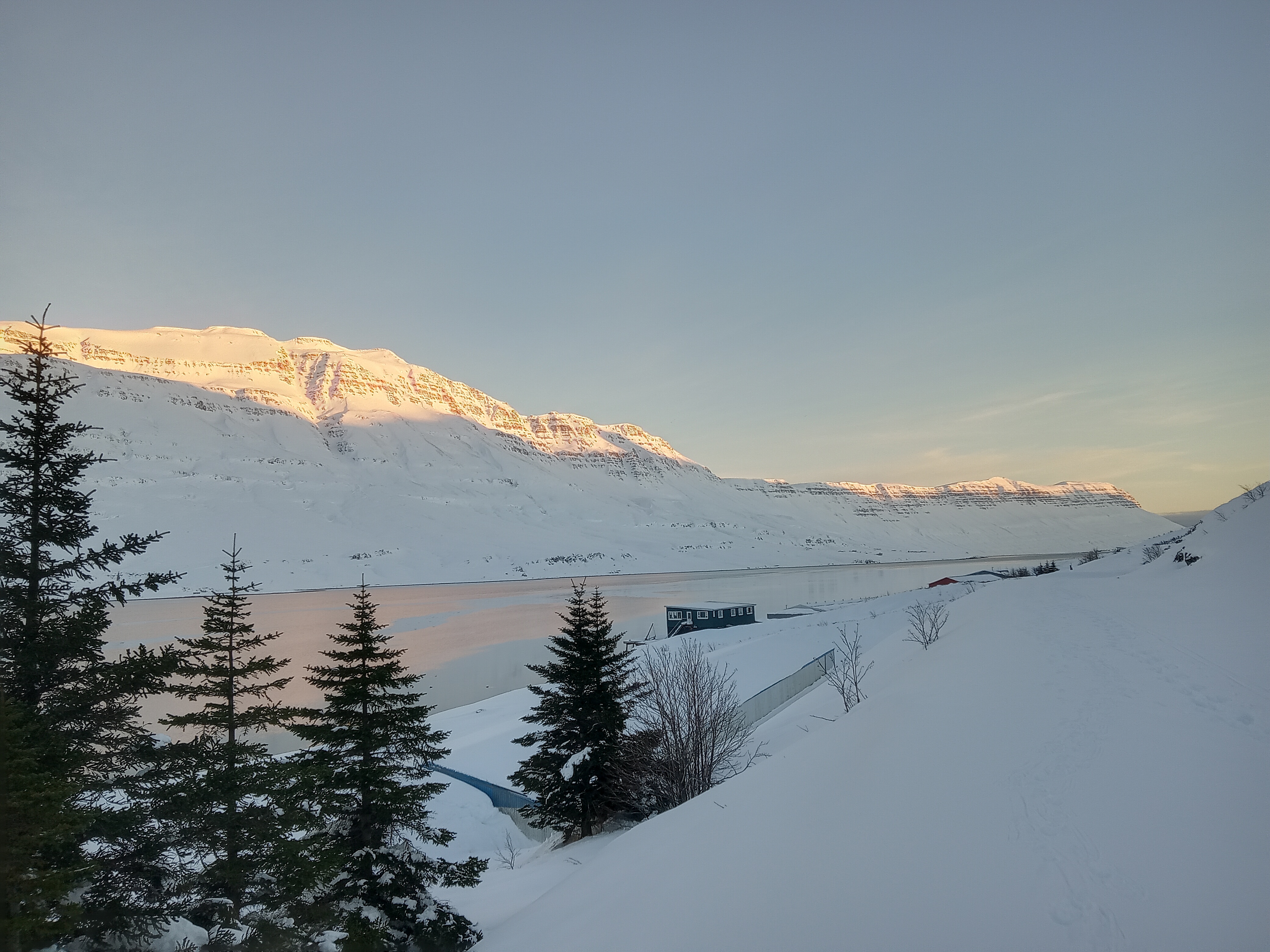
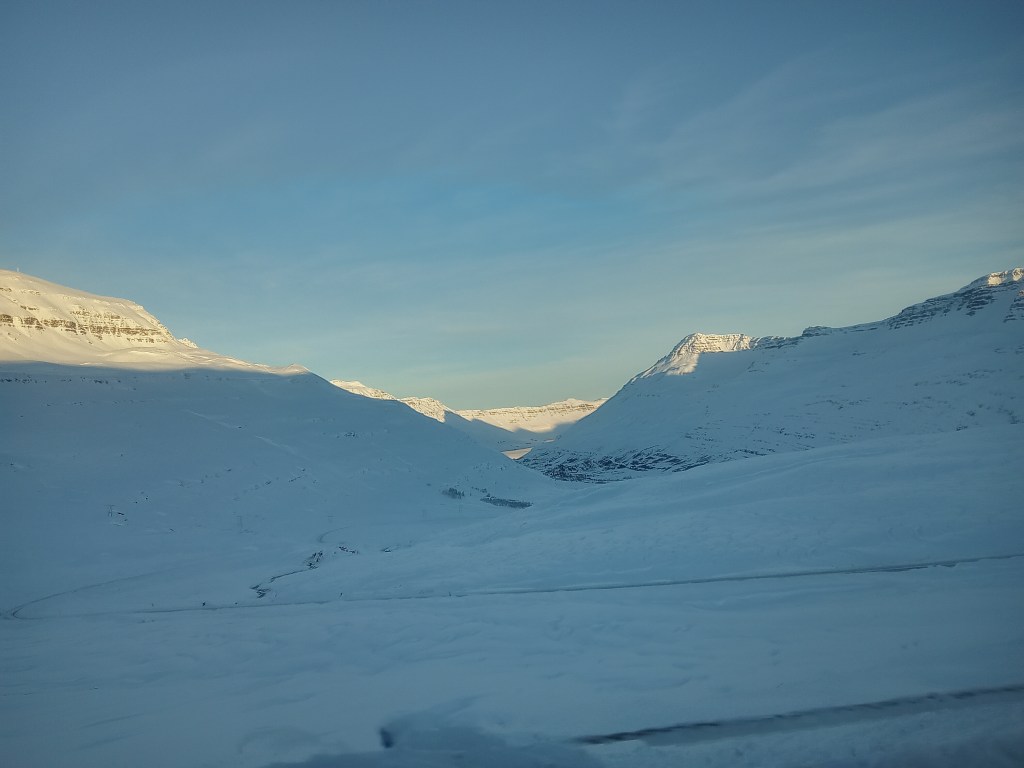
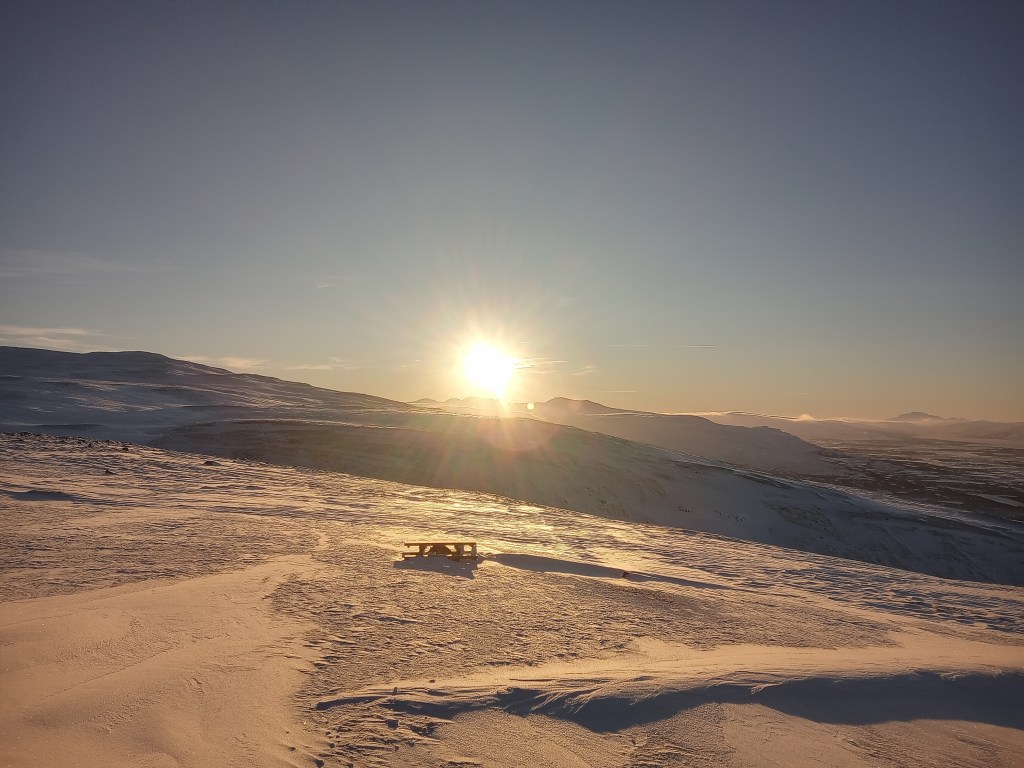
The sun never reaches town between November and February. It’s not dark, but at the same time, it’s magic to pop back over the pass at 3pm and see the Fljótsdal in brilliant sunshine.
2 Violas in Concert – performing -the new forest- with Charles Ross
The big event of the week was a concert with Charles Ross in Slátarhúsið, Egilsstaðir’s cultural centre. Entitled – the new forest – , the centrepiece of the performance was Charles’ eponymous piece commissioned by me for “On A Wing and a Prayer – Deeside” which I also performed at Nordic Music Days in Glasgow in November.
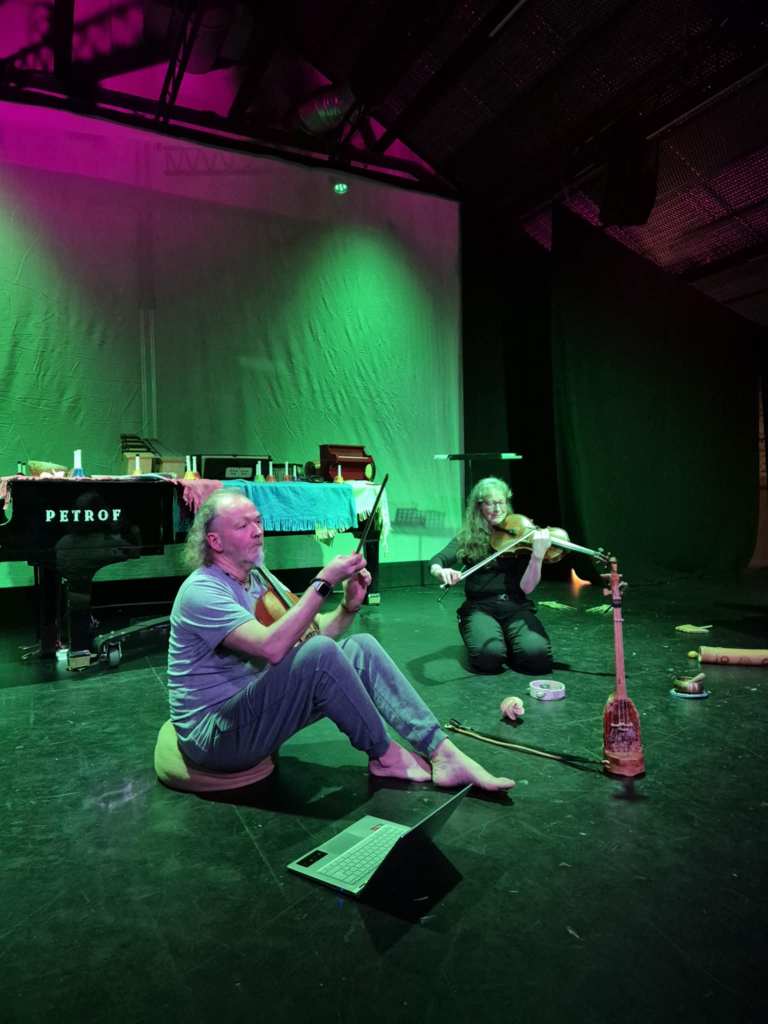
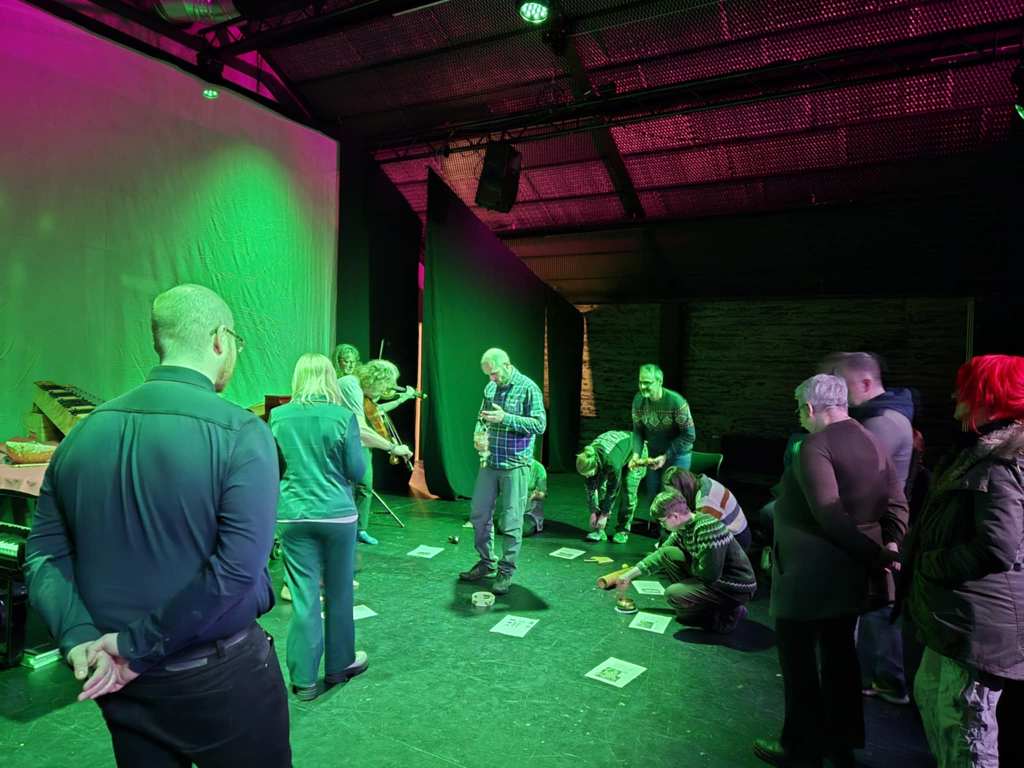
Around this piece we performed a programme of improvised music. For my piece “Lichens” (from “On A Wing and A Prayer” – Morvern) we invited the audience to improvise alongside us on a selection of percussion instruments. I’ve seen this done before, notably in pieces by composer Ruta Vitkauskaite and it’s a great way of bringing an audience into the creative process behind an improvisation. We finished the performance with an improvisation inspired by the gentle calls of whooper swans recorded at Tjörnin in Reykjavik with Charles on the beautiful and delicate Siberian fiddle and added vocals.
If you want to hear -the new forest- for yourself, it’s now available as part of the recently released digital album, On A Wing and A Prayer – Reflections on Deeside’s Changing Habitat.
The full album with Pete and Joe Stollery is available to buy here on Bandcamp. All full purchases come with a free set of binaural recordings which offer you the full immersive experience of being surrounded by the river in the River Quoich sequence. Theseare not available on any other platform and really do offer you the best listening experience if you listen to your music through headphones.
If you’ve enjoyed reading about this visit to Iceland, do subscribe to the blog to keep up to date about future events around Scotland and the Far North. I look forward to telling you in the next few weeks about some very exciting events happening on the Isle of Lewis and in Orkney.
Discover more from nordicviola
Subscribe to get the latest posts sent to your email.


Dear Katherine, It was wonderful reading about your Icelandic travels and Greenland too. We travelled to Kirkenes and then back to Tromso on one of the Hurtigruten ships in a force 12 hurricane. It was certainly an exhilarating experience. We loved Iceland too – a different kind of beautiful wilderness! We are busy just now rehearsing for concerts with our two Choirs. Strathendrick Singers are singing the Will Todd’s Mass in Blue on the 23 March in Killearn church and Bearsden choir’s concert is on May 25 City Halls singing Elijah. I wish you happy travels and thank you for your beautiful stories and music. Kindest wishes, Carol Omand.
LikeLike
Dear Carol, thank you and likewise, lovely to hear of your adventures. It’s one of life’s pleasures to share stories of travel. Let’s hope it helps people to feel that as global population we have a duty to tolerate each other and to share the world and its resources wisely.
LikeLike