


The excitement is mounting here on our John Rae and The Northern Telegraph Route project. Our colleagues from Aldubáran together with Faroese composer Eli Tausen á Lava have arrived from the Faroe Islands and we’ve had our first rehearsal. We’re all set to travel to Orkney and Shetland for our performances next week at Orkney International Science Festival on 9th September and Shetland Museum on 12th September.
Podcast

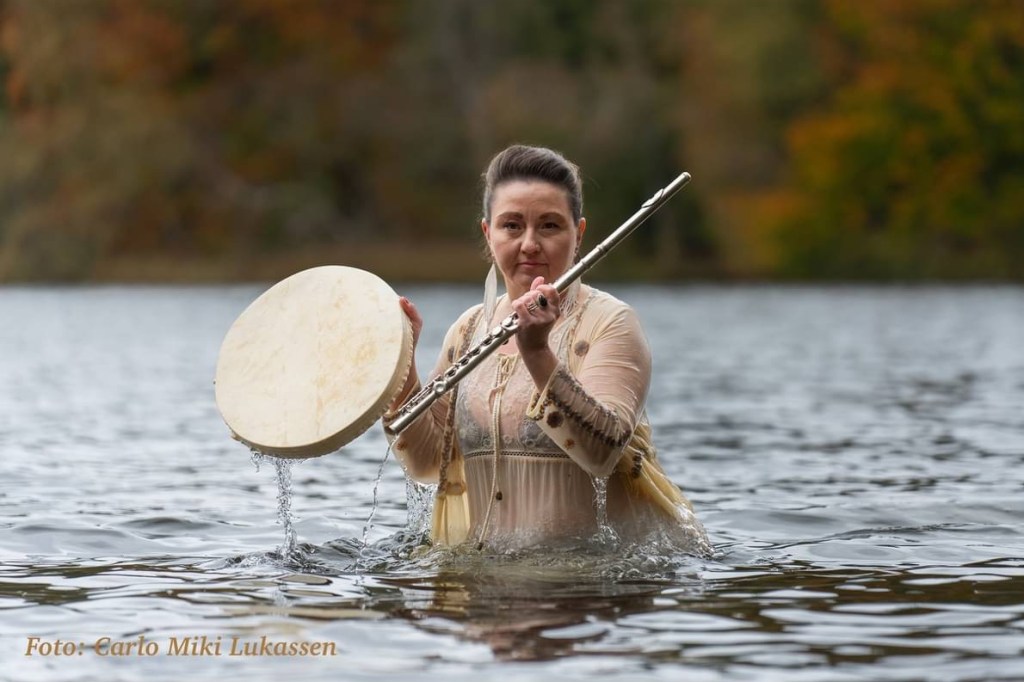
To keep you going till then, this week’s composers on John Rae and The Northern Telegraph Route are Ailie Robertson from Scotland and Greenlandic composer Arnannguaq Gerstrøm, who currently lives in Denmark. They are two composers whose work is very much rooted in the traditions of their home countries, which gives the music a very distinct character. Whilst Ailie chooses to focus on the intimate, seeing the expedition from the perspective of Rae’s wife, Catherine, Arnannguaq’s focus is the Greenlandic landscape and yet, despite this difference in viewpoint, what struck me in conversation was the similarity in the musical processes that they both used.
You can hear them talking about their new pieces, Skeins and “a bad ice year” respectively, in this week’s podcast, which is on soundcloud here.
Skeins by Ailie Robertson for clarinet quartet

Ailie Robertson writes:
As I began researching John Rae’s expedition, I found myself drawn less to the expedition itself than to the stories that sit just outside it. Histories of Arctic exploration tend to celebrate the explorer, but I became increasingly drawn to the invisible labour, care and endurance that made these journeys possible, whilst rarely being part of their telling. Rae had been married only a few months when he left on this expedition, and travelled aboard the Fox, the same ship that had previously carried Lady Franklin’s search for her missing husband. Those details shifted my attention towards quieter networks of connection: relationships, memory, waiting and the work of sustaining lives across long periods of absence.
That led me to the knitting traditions of Scotland, the Faroes, Iceland and Greenland. These distinctive but closely related traditions became another way of thinking about communication and connection: systems for carrying knowledge, identity and memory across generations and across the North Atlantic.
The piece unfolds in six interleaved sections, alternating three Yokes and three Laments. Each Yoke is built by directly mapping the circular colourwork pattern of a traditional sweater from a different point along Rae’s route into musical structure, generating interlocking rhythmic and melodic patterns. Like the knitted garments that inspired them, these sections are built from small, interconnected units whose larger design only gradually comes into view.
The Laments draw on the Orcadian ballad The Bride’s Lament, sung by Sydney Scott and collected on North Ronaldsay in 1987. It appears only in fragments and echoes, gradually surfacing before disappearing again.
Skeins traces the hidden threads that bind these islands together: threads of wool and wire, of song and memory, of departure and return.
.- / -… .- -.. / .. -.-. . / -.– . .- .-. / “a bad ice year” by Arnannguaq Gerstrøm for string quartet
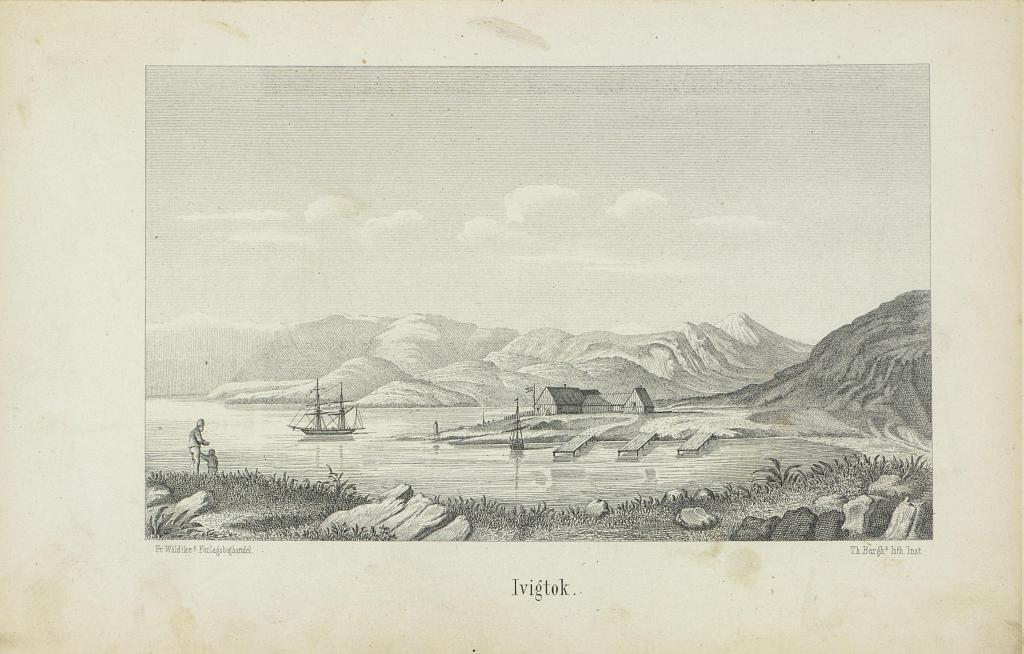
Arnannguaq Gerstrøm writes:
.- / -… .- -.. / .. -.-. . / -.– . .- .-. / “a bad ice year” follows an imagined voyage towards Greenland. At first, the land cannot yet be seen. The vessel moves across the open sea, through calm waters and an immense, uncertain landscape. Gradually, Greenland and its different forms of ice emerge. The Greenlandic words sermeq (glacier), iluliat (icebergs) and sikut (sea ice) are encoded in the music through Morse code.
The title comes from a statement recorded in Qaqortoq in October 1860 by Mr Dorph, a retired assistant who had served in Nanortalik in South Greenland. By then, he had lived in the district for 41 years and had acquired extensive knowledge of ice and navigation conditions along the southern Greenlandic coast. His observations were included among the testimonies gathered in connection with John Rae’s investigations for the proposed telegraph route.
Dorph described 1860 as an unusually severe “bad ice year”. The drift ice remained along the coast far longer than usual, making hunting and travel difficult, even by kayak. His historical observation becomes musical material: the Morse code for A BAD ICE YEAR appears in rhythms, repetitions, interruptions and signals passed between the four instruments.
The music moves between stillness and unrest, distance and proximity, beauty and danger. Morse code becomes both a means of communication and a trace of uncertainty: a signal travelling across great distances, always carrying the possibility of disruption, distortion or disappearance.
The historical phrase “a bad ice year” also resonates differently today, in a time of rapid climatic change. The work therefore closes with an open question: a bad ice year — still?
Tickets are still available for our performances. Click here https://nordicviola.com/forthcoming-performances/
“it’s important to find out how different we are, to be curious about each other, but also to find out how much we have in common. […]Greenland is more arctic and we also have a different language, but still, we are connected through the water, the sea […] we are connected in many ways.” – Arnannguaq Gerstrøm, Greenlandic Composer
Discover more from nordicviola
Subscribe to get the latest posts sent to your email.

